A comprehensive guide for system integrators and mobile retail owners on maximizing return on investment through professional security monitoring
With approximately 50,000 mobile phones stolen every month in India and recovery rates as low as 0.90% in major cities like Delhi, phone store owners face unprecedented security challenges. This article demonstrates how 24/7 monitored security alarm systems deliver measurable ROI through theft prevention, insurance savings, operational efficiency, and brand protection—backed by real data from the Indian security landscape.
Key Takeaway: With modern AIoT security systems like Atigo now available at ₹50,000 with just ₹850/month monitoring, phone stores can expect 454% first-year ROI—recovering their investment and gaining ₹2+ lakhs in net benefits within 12 months.
According to government data from the Sanchar Saathi portal, the mobile theft situation in India has reached critical levels:
For phone store owners, these aren’t just statistics—they represent daily operational reality. A single theft incident involving premium smartphones can result in losses exceeding ₹2-5 lakhs.
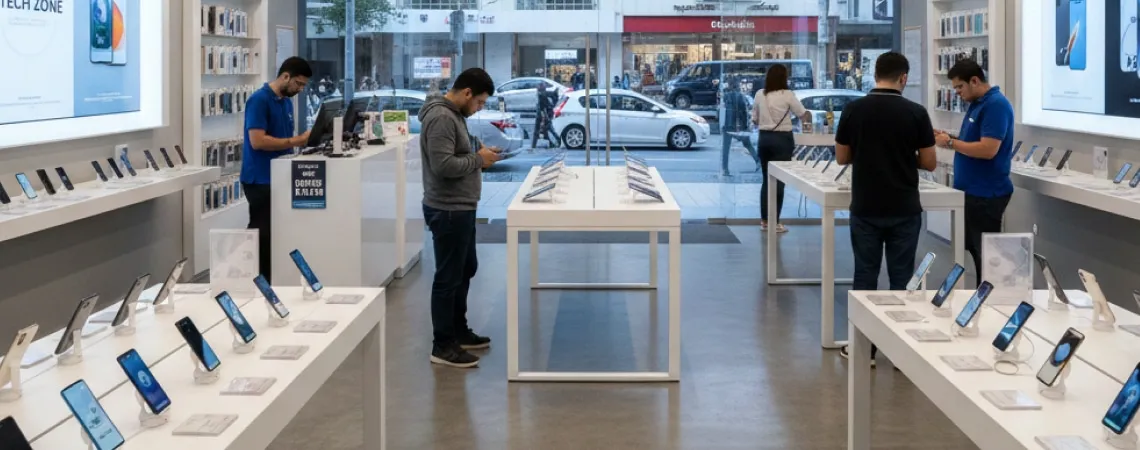
Mobile retail outlets face unique vulnerability factors:
High-Value, Compact Inventory: Flagship smartphones worth ₹50,000-₹1,50,000 fit easily in pockets or bags, making them attractive to organized theft rings.
Display Models at Risk: Demo units must remain accessible to customers, creating security blind spots that sophisticated thieves exploit.
After-Hours Vulnerability: According to global retail security data, 44% of thefts occur when phones are left unattended, with break-ins most common outside business hours.
Resale Market Demand: India’s thriving second-hand mobile device market creates immediate monetization opportunities for stolen inventory.
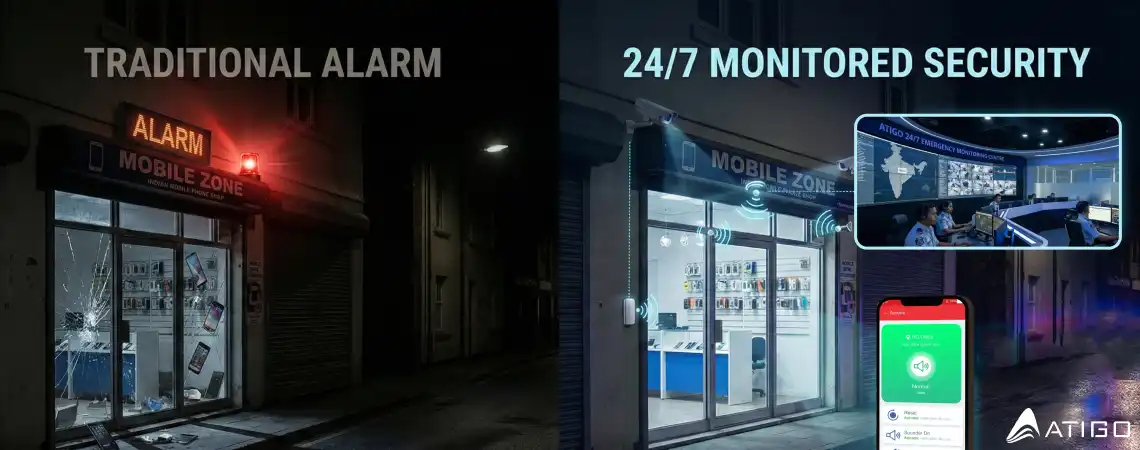
A 24/7 monitored security alarm system differs fundamentally from standalone alarm installations:
Traditional Alarm System: Sounds a local siren when triggered. Response depends on whoever might hear it—neighbors, passersby, or no one.
24/7 Monitored System: Instantly transmits alarm signals to a professional monitoring center staffed by trained security operators who verify threats and dispatch appropriate response within 60 seconds.
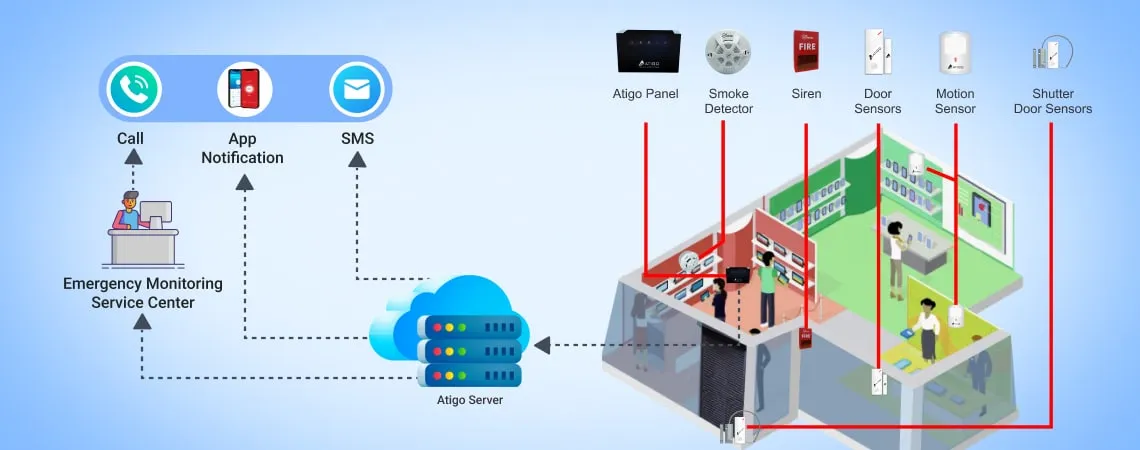
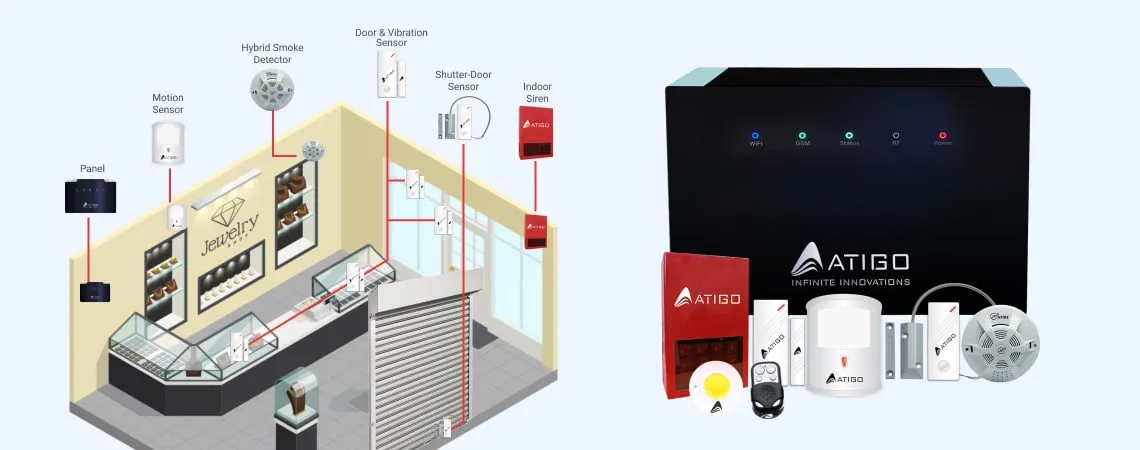
Modern monitored security systems for phone stores integrate multiple layers:
1. Intrusion Detection Sensors
2. Multi-Channel Communication
3. 24/7 Monitoring Center
4. Smart Integration Capabilities
1. Theft Prevention: The Primary Benefit
Inventory at Risk:
Industry Shrinkage Data: Retail stores without professional security systems experience shrinkage rates of 2-3% annually. For phone stores, even a conservative 2% loss equals ₹4,15,000 per year.
With 24/7 Monitored Security: According to retail security industry data, professionally monitored systems reduce shrinkage by 20-30%. Applied to our scenario:
2. Insurance Premium Reductions
Insurance providers recognize monitored security as risk mitigation. Documented discounts include:
Example Calculation: Annual premium for ₹25 lakh inventory coverage: ₹40,000 With 15% monitored system discount: ₹6,000 annual savings
Many insurers’ savings offset 40-60% of monthly monitoring fees.
3. Reduced False Alarm Fines
According to municipal regulations in major Indian cities, businesses face escalating fines for repeated false alarms:
Professional monitoring centers verify alarms before police dispatch, reducing false alarm rates by up to 90%. This prevents:
Annual savings potential: ₹15,000-₹30,000
4. Operational Efficiency Gains
Remote Management Capabilities: Modern monitored systems allow owners to:
Time savings calculation: If remote management saves just 30 minutes per week in security-related tasks, that equals 26 hours annually. At ₹500/hour management time value = ₹13,000 annual value.
5. Employee Productivity and Peace of Mind
Security concerns create invisible costs:
Measurable impact: Studies in retail security show that enhanced safety measures correlate with 5-8% productivity improvements. For a 3-person store with ₹2.5 lakh monthly payroll, even a 5% productivity gain represents ₹1,50,000 annual value.
6. Customer Trust and Brand Protection
Quantifying brand value: While difficult to measure precisely, one major theft incident creating negative local publicity can cost 10-15% of annual revenue in lost customer confidence. For a store with ₹60 lakh annual revenue, preventing just one such incident saves ₹6-9 lakhs in potential revenue loss.
The perception of security matters:
7. After-Hours Peace of Mind
While this benefit resists quantification, numerous phone store owners report it as the most valued aspect of professional monitoring.
The psychological ROI of professional monitoring:
Investment Required (Real-World Example – Atigo AIoT Security System):
Quantifiable Annual Returns:
ROI Calculation: Using conservative estimates: (₹2,67,000 – ₹10,200) / ₹57,200 = 454% first-year ROI
Breaking it down simply: For every ₹1 you invest, you get ₹4.54 back in the first year alone.
After the initial hardware investment is recouped, subsequent years show 3,508% annual returns on the monitoring cost alone (₹2,59,800 in benefits for just ₹10,200 annual monitoring fee).
Assessment Checklist for Integrators
Physical Layout Analysis:
Inventory Risk Profiling:
Operational Requirements:
With 24/7 Monitored Security: According to retail security industry data, professionally monitored systems reduce shrinkage by 20-30%. Applied to our scenario:
Annual savings potential: ₹15,000-₹30,000
For a Standard 300-500 sq ft Phone Store:
Perimeter Protection:
Interior Detection:
Control and Communication:
Real-World Example – Atigo AIoT System Configuration: Complete system as described above: ₹50,000 including installation
Total 3-Year Cost of Ownership:
3-Year Benefits (conservative): ₹8,01,000-₹9,70,500
Net Gain: ₹7,29,400-₹8,98,900 over 3 years
CCTV Integration Benefits: When alarm systems connect with video surveillance:
Access Control Synchronization:
Triggers alerts for unusual access patterns
Point-of-Sale Integration (Advanced):
Provides comprehensive business intelligence
1. Monitoring Center Credentials
Essential Certifications:
Operational Standards:
2. Geographic Coverage and Local Knowledge
Why Local Matters:
Questions to Ask:
3. Technology and Communication Reliability
Encryption Standards: All communication should use AES-256 military-grade encryption to prevent signal interception or spoofing.
Solution: Systems with cellular backup + Wi-Fi + landline provide redundancy.
Multi-Path Communication: The system must transmit signals even if thieves:
4. Response Protocols
Verify These Procedures:
Customization Matters: Every business has unique needs. Your monitoring service should create tailored response plans, not one-size-fits-all protocols.
Reality Check: Calculate what you actually can’t afford:
One flagship phone theft: ₹75,000-₹1,50,000 lost
Monthly monitoring (Atigo): ₹850
Annual monitoring cost: ₹10,200
The math is clear: Monitoring pays for itself by preventing just one mid-range phone theft per year (₹25,000 phone = 3.5 years of monitoring covered).
Moreover, consider that monitoring fees are:
The Hard Truth: Cameras are valuable for evidence but poor at prevention.
What cameras do: Record crimes as they happen What monitored alarms do: Stop crimes before significant loss occurs
The optimal solution: Integration of both systems for video-verified alarm response—the gold standard in retail security.
Why Professional Monitoring Solves This:
Self-monitored systems: High false alarm rates (95-98%) because every trigger = police call
Professionally monitored: Operators verify before dispatch, reducing false alarms by 85-90%
Result: Police respond faster to your verified alarms because they trust your monitoring center’s verification process.
The Hidden Costs Insurance Doesn’t Cover:
Prevention is always cheaper than claims recovery.
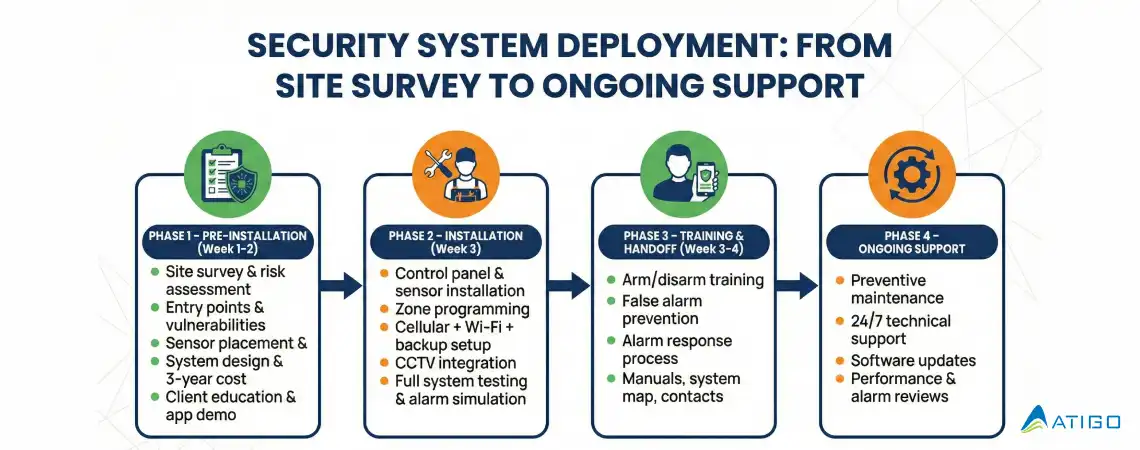
Site Survey and Assessment:
System Design:
Testing Protocol:
Professional Installation Standards:
Documentation Delivery:
User Training Essentials:
Service Agreement Components:
Performance Monitoring:
Most commercial property insurance policies in India require or incentivize:
Integrator Action: Provide insurance documentation templates and certification letters to clients.
If systems include video verification or access control:
Some Indian cities have alarm permit requirements:
Integrator Responsibility: Research local regulations and guide clients through compliance.
Next-generation systems now incorporate:
ROI Impact: Early detection can prevent incidents that traditional sensors might miss, further reducing losses.
Smart business ecosystems connect:
Business Value: Comprehensive protection extends beyond security to overall business resilience.
Modern platforms offer:
Integration with business intelligence tools
Scalability: Particularly valuable for phone store chains expanding across multiple locations.
For phone store owners in India, the question isn’t whether to invest in 24/7 monitored security—it’s how quickly they can implement it. With mobile theft rates continuing to rise and recovery rates remaining abysmal, professional monitoring represents not just protection, but a strategic competitive advantage.
The numbers speak clearly:
For system integrators, this represents a consultative sales opportunity where demonstrating ROI is straightforward, client satisfaction is high, and recurring revenue through monitoring fees creates sustainable business models. At ₹50,000 system cost with ₹850/month monitoring, you can offer compelling value propositions that overcome price objections while maintaining healthy margins.
The Indian phone retail market continues to grow, driven by smartphone penetration and upgrade cycles. Every new store opening, every inventory expansion, creates opportunity for security professionals who can articulate value beyond basic alarm installation.
In a market where 50,000 phones disappear monthly and fewer than 15% return to their owners, the real question phone store owners must ask themselves is: “Can I afford not to have 24/7 professional monitoring?”
The answer is mathematical: Spending ₹57,200 in Year 1 to protect ₹20+ lakhs of inventory while gaining ₹2.6+ lakhs in benefits isn’t an expense—it’s one of the smartest investments in your business.
For a standard phone store, professional installation takes 4-8 hours, with the business remaining operational during installation. With modern wireless systems like Atigo, installation is even faster with minimal disruption.
Quality systems include cellular (GSM) backup communication and battery backup providing 24-48 hours of operation. Atigo’s triple-path communication (GSM + Wi-Fi + Bluetooth) ensures redundancy.
Yes, but you lose the primary ROI drivers: verified response, police dispatch, and professional threat assessment. The ₹660/month monitoring fee is what transforms a ₹50,000 alarm into a ₹2.6 lakh annual value generator.
For a complete Atigo AIoT system: ₹50,000 (hardware/installation) + ₹7,200 (monitoring) = ₹57,200 total first year. Subsequent years are just ₹7,200 annually.
Quality systems last 7-10 years with proper maintenance, though cellular modules may need upgrading as networks evolve (3G to 4G to 5G). With proper care, your ₹50,000 investment protects your business for nearly a decade.
Ideally, integrated systems monitor both for maximum efficiency and cost-effectiveness.
Most modern systems can integrate with standard IP cameras for video verification, dramatically reducing false alarms.
India’s trusted security partner since 2013. Made in India manufacturer of 24/7 monitored alarm systems.
© 2013-2025 Atigo Security — A division of Atigo Enterprises Limited
Made in India. Monitored in India.