RBI Security Guidelines for Banks (2026): How 24/7 Alarm Monitoring Ensures Branch & ATM Compliance
TL;DR — RBI Alarm Monitoring Compliance (2026)
RBI security guidelines require continuous physical security across bank branches, ATMs, and IT facilities.
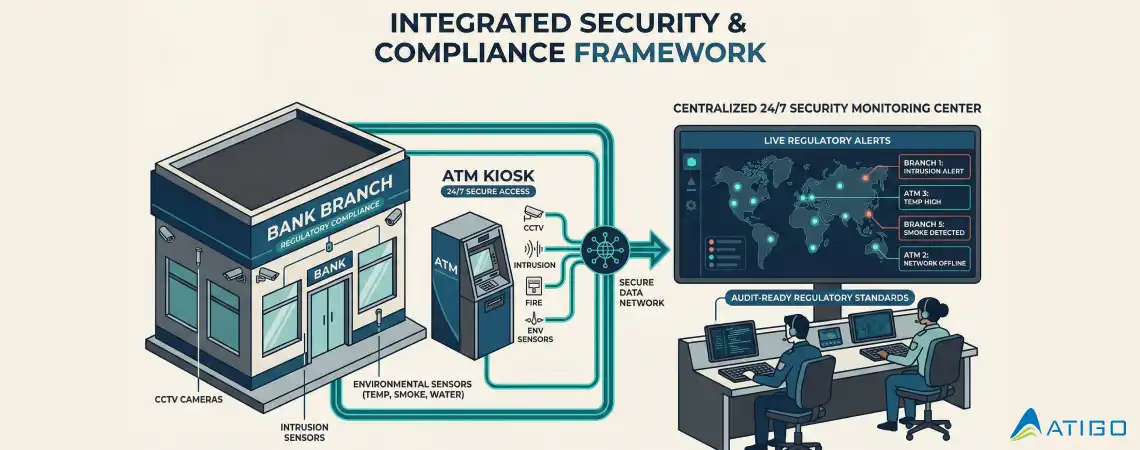
Fire, intrusion, CCTV, and environmental systems must be integrated and continuously monitored.
Security incidents must be detected and reported within 2–6 hours, making 24/7 monitoring operationally essential.
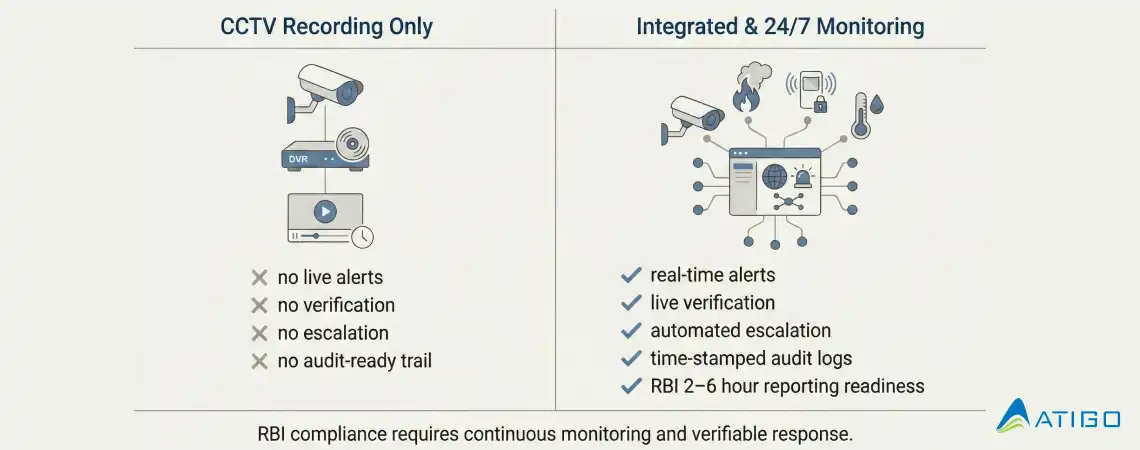
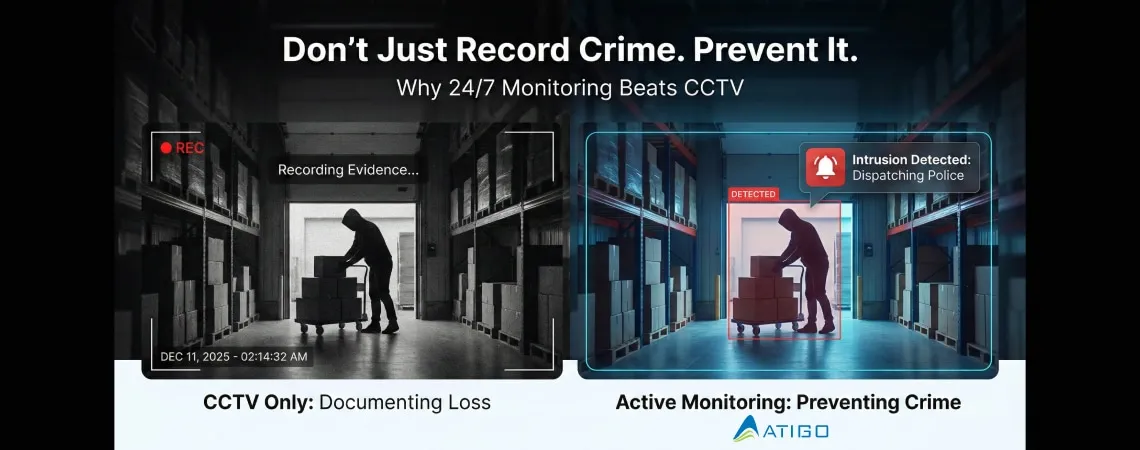
CCTV recording alone does not meet RBI compliance intent without active monitoring and verification.
Centralized monitoring stations are now critical for audit-ready RBI compliance.
Does RBI Require Alarm Monitoring for Bank Branches and ATMs?
Yes. While RBI does not explicitly use the term “24/7 alarm monitoring,” its cybersecurity framework and baseline security controls require continuous detection, rapid escalation, and time-bound incident reporting. In practice, this makes professional 24/7 monitoring essential for compliance.
RBI’s cybersecurity framework explicitly includes physical security controls across the entire banking ecosystem—branches, ATMs, vaults, data centers, and IT facilities. Banks must protect not only digital assets but also physical infrastructure that supports financial operations.
This includes power systems, telecom connectivity, environmental conditions, access control, and fire safety systems. These controls must work together as a unified security environment.
Environmental monitoring (temperature, smoke, water ingress)
CCTV at entry, exit, and vault areas with 180-day footage retention
Secure audit logs and access monitoring
Real-time alerting and escalation mechanisms
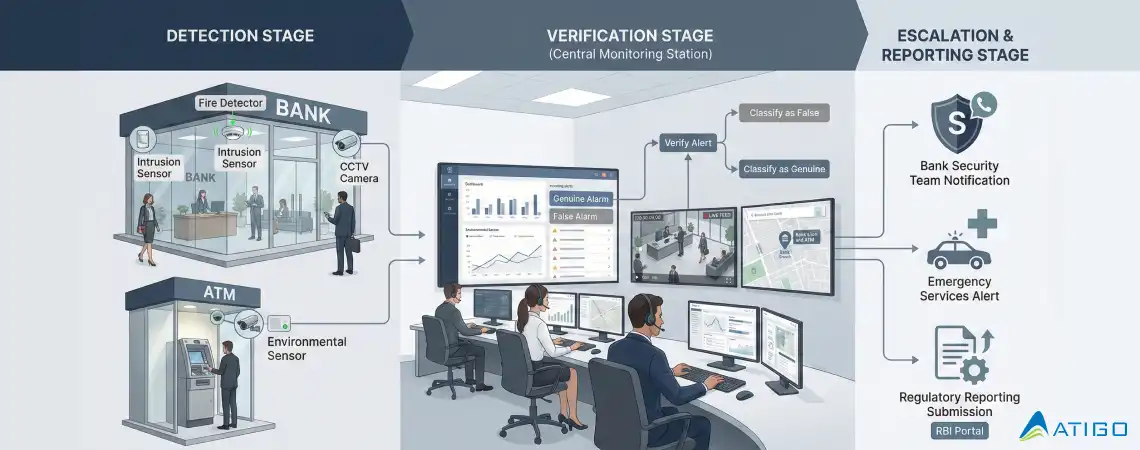
Security incidents must be reported to RBI within 2–6 hours of detection, with follow-up reporting where required.
Why CCTV Alone Is Not RBI-Compliant
CCTV systems are mandatory, but recording footage alone does not ensure compliance. RBI expects active detection, verification, and response. Unmonitored CCTV cannot detect fires, validate alarms, or trigger timely escalations.
True compliance requires CCTV to be integrated with fire, intrusion, and environmental alarms and monitored continuously.
⚠ Is Your ATM Network Audit-Ready? Don’t guess. Download our comprehensive compliance checklist to see exactly where you stand.
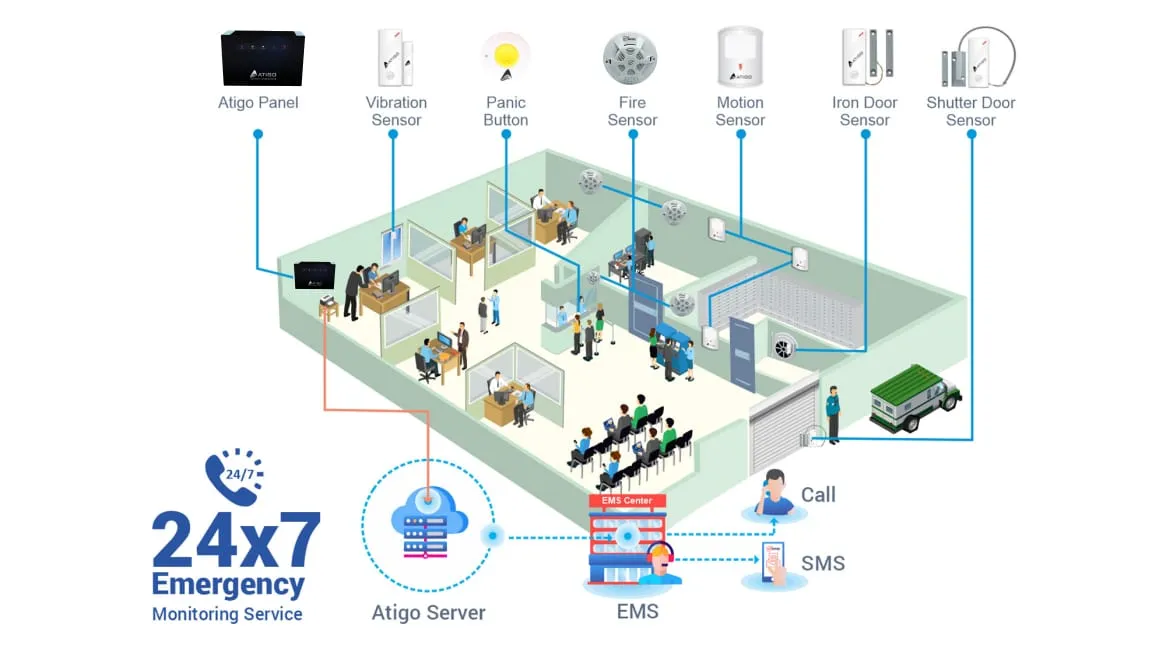
A Central Monitoring Station (CMS) is a 24/7 command center that receives alerts from bank locations, verifies incidents using live video and audio, escalates events to bank officials and emergency services, and maintains detailed audit trails.
Modern CMS operations include redundancy, backup power, disaster recovery monitoring sites, and standardized incident response protocols—critical for meeting RBI timelines.
False Alarm Management and RBI Compliance
Most alarm activations are false positives. Without verification, this leads to alert fatigue and delayed responses.
Professional monitoring centers use live video verification, two-way audio, and standardized incident classification to ensure genuine threats receive immediate response while filtering false alarms.
Environmental Monitoring: A Core RBI Requirement
RBI explicitly requires monitoring of environmental conditions such as temperature, smoke, humidity, and water levels. These risks can disrupt banking operations as severely as cyberattacks or physical intrusions.
Fire remains one of the most critical threats to bank infrastructure, especially in server rooms, vaults, and ATM kiosks.
Why India-Specific Alarm Systems Matter
Indian operating conditions high temperatures, extreme humidity, and power fluctuations often cause imported alarm sensors to fail. This creates compliance gaps.
Alarm systems engineered specifically for Indian environments ensure reliable operation across diverse geographies and continuous RBI compliance.
Certifications Banks Should Look For
When selecting alarm and monitoring solutions, banks should evaluate:
IS / ISO 7240 compliance
STQC testing
Secure communication using AES-256 encryption
Proven uptime and redundancy
Alignment with RBI cybersecurity principles
RBI Vendor Risk Management Considerations
RBI requires banks to assess and monitor vendor risk. Key evaluation questions include:
Can the vendor meet the 2–6 hour reporting window?
Is monitoring uninterrupted during disasters?
Can systems integrate with existing alarms and CCTV?
Are audit trails readily available for RBI inspections?
RBI-Compliant Alarm Monitoring Architecture
On-Site Systems
Fire detection panels
Intrusion and access alarms
Environmental sensors
IP-based CCTV systems
Communication Layer
Encrypted data transmission
Multi-path connectivity (Ethernet and GSM)
Automatic failover
Monitoring Center
24/7 staffed operations
Alarm verification tools
Incident management software
Emergency services integration
Cost Comparison: Guards vs Integrated Monitoring
Traditional Guard Model
₹15,000–20,000 per location per month
High recurring cost
Human dependency and coverage gaps
Integrated Monitoring Model
Lower monthly cost per site
Continuous coverage
Faster verification and escalation
Audit-ready compliance
How AI Is Shaping the Future of Bank Security
RBI’s framework focuses on detection, response, and recovery. Modern systems now use AI-powered video analytics, predictive maintenance, automated incident correlation, and behavioral anomaly detection to move from reactive compliance to predictive security.
RBI security guidelines clearly indicate that bank security must be continuous, integrated, and verifiable. 24/7 alarm monitoring is no longer optional it is the operational foundation for compliance, resilience, and trust.