Why 24/7 Monitored Security Systems Are Non-Negotiable for Electronics and IT Stores in 2026

Electronics store at night vulnerable to after-hours break-ins without 24/7 monitoring

TL;DR (Quick Summary - 2 Minutes)

Don't have 30 minutes? Here's what you absolutely need to know

The Problem:

50%+ of electronics store crimes happen after hours (8 PM-4 AM) when stores are unmanned. Average break-in: 8-12

Why Traditional Security Fails

  • Unmonitored alarms: Just noise. Nobody responds at 3 AM.
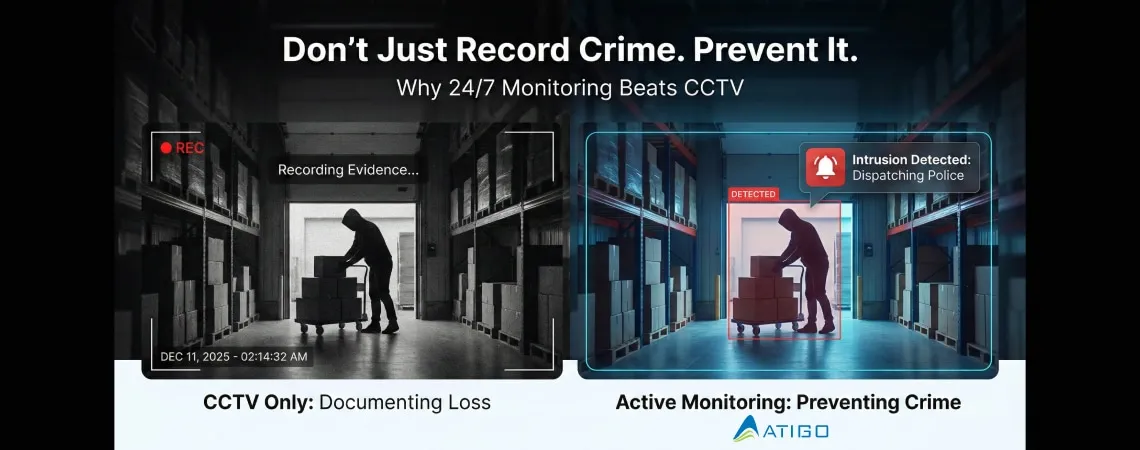
  • CCTV only: Records the theft, doesn’t stop it.
  • Personal response: Takes 30-60 min. Burglary completes in 12 min.

The Solution

24/7 professional monitoring with sensor-based intrusion detection:

  • 60-second verification (real vs. false alarm)
  • Immediate police dispatch (verified emergency = priority response)
  • 8-15 minute police arrival (stops theft before completion)

The Cos

₹780/month (₹660 + GST) = ₹9,300/year

  • Insurance discounts: 10-20% (₹10,000-20,000 savings)
  • Break-even: Prevents ONE break-in every 86 years
  • Actual benefit: ₹70,000+ annually (90% risk reduction)

The Cos

₹780/month (₹660 + GST) = ₹9,300/year

  • Insurance discounts: 10-20% (₹10,000-20,000 savings)
  • Break-even: Prevents ONE break-in every 86 years
  • Actual benefit: ₹70,000+ annually (90% risk reduction)

Real Results

UP Warehouse case: 2:47 AM intrusion detected → Police arrived 8 minutes later → ₹1+ crore merchandise secured, 3 s

Without monitoring: Same break-in discovered 6 hours later → Merchandise dispersed across grey markets → ₹0 recove

The Alarming State of Physical Security Threats in Indian Banking

It’s 2:47 AM on a Tuesday. Your electronics store is dark, locked, and supposedly secure. Your CCTV cameras are recording. Your alarm panel is armed. You’re at home, asleep.

This is precisely when thieves strike.

In the early morning hours, a gang breaches a mobile store in Chandigarh’s Sector 22. They don’t smash the front windows. They systematically demolish the rear wall, disable the DVR, and load 90 mobile phones, two laptops, and three smartwatches into waiting vehicles. Total haul: over ₹10 lakh. By the time morning staff arrive at 10 AM, the criminals are long gone.

This isn’t an isolated incident. According to security industry data, more than 50% of electronics store crimes occur between 8 PM and 4 AM —when your store is closed, unmanned, and most vulnerable. In Jalandhar, thieves demolished walls to access a mobile shop, stealing ₹7 lakh worth of inventory. In Bangalore, mobile phone thefts surged 450% in 2022, with recovery rates remaining dismally low.

For electronics and IT retailers in India, the harsh reality is this: your store’s most dangerous hours are the ones when you’re not there.

In 2026, a basic alarm system that merely sounds when triggered is dangerously inadequate. When a break-in happens at 3 AM and nobody’s monitoring that alarm, you’re just providing background noise for a robbery in progress. Here’s why 24/7 professionally monitored security systems have become an essential investment—not a luxury—for electronics retailers who want to stay in business.

The Primary Threat: When Your Store Becomes a Target After Dark

Protect Your Electronics Store Starting Tonight

Don’t wait until you’re reviewing CCTV footage of your own burglary. Atigo’s 24/7 monitored security systems start at just ₹660

Free Vulnerability Assessment

Our security experts will evaluate your store’s after-hours vulnerabilities and design a sensor-based protection system customi
Protect Your Electronics Store Starting Tonight

🔑 KEY TAKEAWAY

Electronics stores face their highest crime risk after hours — not during business hours.

  • 50%+ of electronics crimes occur between 8 PM and 4 AM (when stores are unmanned)
  • 8–12 minutes is all burglars need to steal ₹10+ lakh worth of inventory
  • Under 15% of stolen electronics are ever recovered
  • Traditional security fails because nobody is watching during the 10–12 hours you’re closed

The solution: 24/7 professional monitoring that detects intrusions, verifies threats, and coordinates immediate police response within minutes — stopping theft before losses occur.

After-Hours Break-Ins Dominate Electronics Retail Crime

While daytime shoplifting makes headlines, the data tells a different story for electronics stores:

your greatest losses occur when nobody's watching.

Industry research on electronics retailers reveals a stark pattern:

  • More than 50% of electronics store crimes occur between 8 PM and 4 AM
  • Peak vulnerability window: 2 AM to 5 AM when streets are empty and response times are longest
  • Average break-in duration: 8-12 minutes from entry to exit with loaded merchandise
  • Recovery rate: Less than 15% of stolen electronics are ever recovered

The All India Mobile Retailers Association (AIMRA) reports that shrinkage at mobile and electronics chains has exploded from ₹50,000-₹1,00,000 per month five years ago to ₹5,00,000-₹10,00,000 per month today. This isn’t happening during business hours—it’s happening when stores are closed and unprotected.

Why Electronics Stores Are Prime After-Hours Targets

Your inventory profile makes you exceptionally vulnerable to professional burglars:

High-Value, Small-Footprint Merchandise

  • Latest smartphones: ₹15,000-₹1,50,000 each, fits in a pocket
  • Laptops: ₹30,000-₹2,00,000 each, easily stackable for transport
  • Smartwatches and accessories: ₹10,000-₹50,000 each, hundreds per square meter
  • Gaming consoles: ₹25,000-₹60,000 each, compact packaging

Rapid Resale Ecosystem

According to Bangalore police investigating mobile thefts, stolen high-end phones are quickly disassembled—a single iPhone 15 screen alone can fetch ₹50,000-₹60,000 in the grey market. Complete devices are sold intact or as parts across India within 24-48 hours, often disappearing into the refurbished phone market where they’re impossible to trace.

Predictable Unmanned Periods

Unlike 24/7 convenience stores or restaurants, electronics retailers have consistent closure patterns—typically 10-12 hours every night, plus full days during festivals or holidays. This predictability allows criminals to surveil, plan, and execute with minimal detection risk.

The New Burglary Tactics: Sophisticated and Systematic

Modern electronics store burglars don’t smash windows and run. Recent incidents across India reveal increasingly professional approaches:

Physical Breach Methods

  • Wall demolition: Chandigarh and Jalandhar cases show criminals bypassing reinforced storefronts entirely, demolishing rear or side walls to gain entry
  • Ceiling access: Breaking through shared walls with adjacent businesses or entering from above
  • Lock manipulation: Professional lock-picking tools that leave minimal visible damage
  • After-hours “key holder” social engineering: Impersonating police or fire services to gain authorized access

Detection Avoidance

  • DVR/NVR targeting: First action is often disabling or stealing recording equipment to eliminate evidence
  • CCTV blind spots: Advance surveillance identifies camera coverage gaps
  • Alarm fatigue exploitation: Triggering multiple false alarms days before the real break-in to desensitize response
  • Communication jamming: Signal blocking devices that prevent wireless alarms from transmitting

Inside Knowledge

The Chandigarh case is particularly telling—the arrested suspect had worked at the targeted mobile store for four years. Insider knowledge of security systems, inventory locations, high-value stock, and vulnerability windows is increasingly common.

The Timing Problem: When Minutes Matter

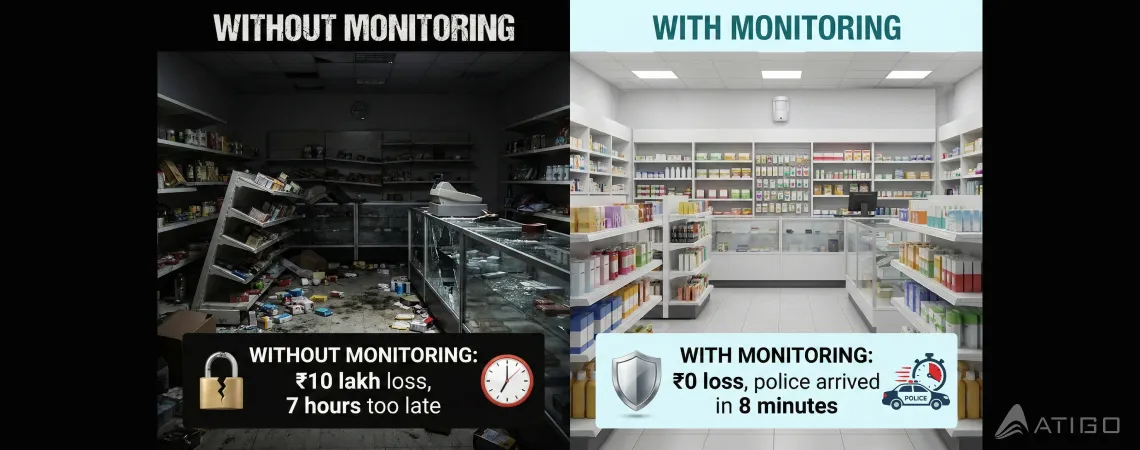
The 8-Minute Difference: Professional monitoring stops theft before completion. Personal response discovers theft hours
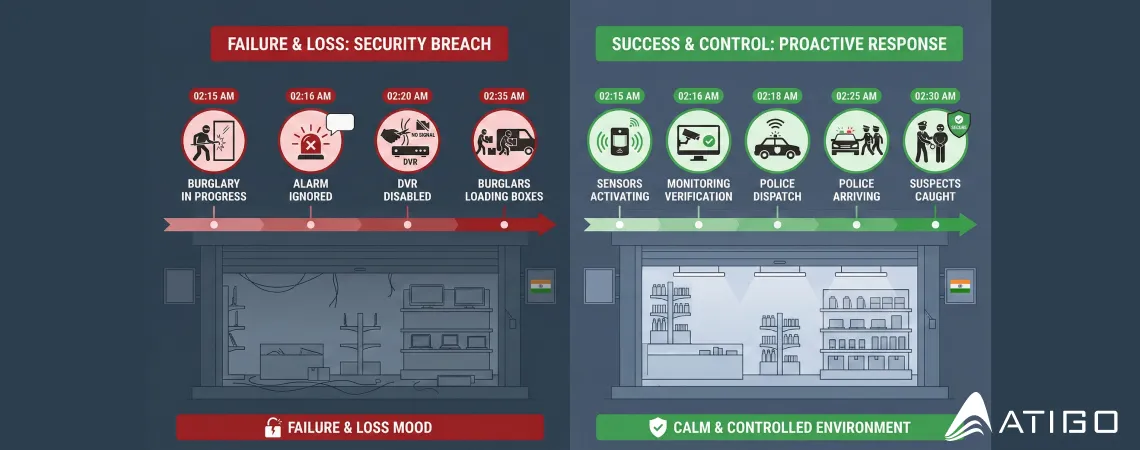
Timeline comparison showing 24/7 monitoring stops break-ins in 8 minutes while unmonitored systems result in ₹10 lakh losses

Here’s the brutal mathematics of unmonitored after-hours security:

Physical Breach Methods

  • 2:47 AM: Alarm triggered as burglars breach wall 
  • 2:48 AM: Alarm sounding but nobody’s listening—owner is asleep 
  • 2:50 AM: Burglars locate and disable DVR 
  • 2:52-2:58 AM: Systematic loading of smartphones, laptops, and accessories 
  • 2:59 AM: Exit with ₹10+ lakh in merchandise 
  • 10:00 AM: Owner arrives to discover break-in – 7 hours too late

By the time you discover the break-in, file a police report, and begin investigating, your inventory is already circulating through grey markets across multiple states. Without immediate detection and response, recovery is virtually impossible.

Why Traditional Security Measures Fail After Hours

Monitored vs. Unmonitored: Side-by-Side Comparison

Time Unmonitored System 24/7 Monitored System
2:47 AM Burglars breach rear wall Burglars breach rear wall
2:47:15 Local alarm sounds (neighbors ignore) Alarm signal transmitted to monitoring center
2:48:00 Alarm continues (owner asleep, phone on silent) Monitoring operator analyzes sensor data
2:48:30 Burglars locate DVR and disable it Professional verification: genuine intrusion confirmed
2:49:00 Burglars begin loading smartphones into bags Owner contacted: phone call + SMS + app notification
2:49:30 10 iPhones loaded Police dispatched with verified break-in status
2:50:00 15 iPhones + 3 laptops loaded Police en route (ETA: 6–8 minutes)
2:52:00 25 phones + 5 laptops loaded in vehicle Police arrival imminent
2:55:00 Burglars exit with ₹10+ lakh merchandise Police arrive: suspects caught or flee, merchandise secured
2:59:00 Getaway complete, heading to distribution point Break-in stopped. Loss: ₹0. Arrests: 3 suspects
7:30 AM Owner wakes up, sees missed alarm notifications Owner receives incident report with complete details
8:30 AM Owner arrives at store, discovers break-in Investigation complete, store reopens normally
9:00 AM Police called, report filed Business continues without interruption
10:00 AM CCTV review (if DVR not stolen) shows masked individuals Merchandise protected, criminals apprehended
Result Total Loss: ₹10+ lakh. Recovery: 0%. Total Loss: ₹0. Recovery: 100%.

Bottom Line: For ₹25-30 per day, you eliminate 90% of break-in risk and gain complete peace of mind.

⚠️ THE REALITY CHECK

Why unmonitored security doesn’t work for after-hours break-ins:

  • Unmonitored alarm: Just noise that neighbors ignore. Police don’t respond to unverified alarms.
  • CCTV only: Records the burglary but doesn’t stop it. DVRs are often stolen or disabled first.
  • “I’ll respond myself”: Takes 30–60 minutes from your bed to the store. A burglary is completed in 8–12 minutes.
  • Physical barriers alone: Chandigarh burglars demolished the wall. Jalandhar burglars broke through adjacent structures.

The gap: Without 24/7 professional verification and police coordination, you’re not preventing crime — you’re just documenting your losses.

The Fatal Flaw of Unmonitored Alarm Systems

Most electronics stores have alarm systems. The burglar in Chandigarh didn’t care—the store had one too. Why? Because an alarm that nobody’s actively monitoring is just a noise complaint waiting to happen.

Here’s the critical vulnerability chain

Scenario: 3:15 AM Break-In

  1. Alarm triggers as burglars force entry
  2. Local siren sounds (neighbors either don’t hear, don’t care, or assume it’s another false alarm)
  3. Owner’s phone may receive notification (owner is asleep, phone on silent)
  4. No verification occurs (no one confirms this is a real break-in vs. faulty sensor)
  5. No police dispatch (unverified alarms get low priority or no response)
  6. Burglary completes in 8-12 minutes (merchandise loaded and criminals gone)
  7. Owner discovers break-in 6-8 hours later when arriving to open the store

Without someone actively monitoring 24/7 and immediately verifying threats, your alarm system is essentially a deterrent for amateurs—and useless against professional burglars who know you’re not watching.

The "I'll Respond Myself" Problem

Some store owners believe they can handle alarm responses personally

Reality Check

  • You need 6-8 hours of sleep nightly
  • Response time from home to store: 20-45 minutes in most Indian cities
  • By the time you wake up, see the alert, get dressed, and drive to your store, the break-in is long over
  • Arriving during an active burglary puts you at personal risk (violence at electronics stores is increasing)
  • Police are hesitant to respond to unverified alarms—they need professional monitoring confirmation

A study on retail crime timing found that average time from break-in to exit for electronics theft is under 10 minutes. You simply cannot respond fast enough on your own.

CCTV Without Monitoring: Recording Your Own Robbery

What Happens

  • Cameras capture clear footage of the break-in
  • Burglars either mask their identities or don’t care (recovery rates are so low)
  • In many cases, burglars steal or disable the DVR/NVR, eliminating evidence
  • Footage is reviewed hours later, after merchandise is gone
  • Police use footage for investigation, but recovery remains unlikely

The Hard Truth

According to Bangalore police investigating electronics thefts, even with clear CCTV footage and identified suspects, recovery rate for stolen electronics is less than 15%. By the time you

review footage and file an FIR, your inventory has been disassembled and sold across multiple states.

CCTV cameras are valuable forensic tools, but they’re reactive, not preventive. They document your losses—they don’t prevent them

The "Fortress Approach" Isn't Enough

Some electronics retailers invest heavily in physical security:

  • Reinforced shutters and doors
  • Security grilles
  • Multiple locks
  • Strong safes

Yet burglars simply adapt:

  • Chandigarh case: Demolished the wall (bypassed all door security)
  • Jalandhar case: Broke through adjacent structures 
  • Time added by physical barriers: 2-5 minutes (not enough to make a difference without monitoring)

Physical security slows criminals down—but without someone watching and responding in real-time, you’re just making them work slightly harder for the same result.

Local Security Guards: The Human Limitation

Security Guard vs. 24/7 Professional Monitoring: Cost-Benefit Analysis

Factor Physical Security Guard 24/7 Professional Monitoring
Monthly Cost ₹15,000–25,000 ₹780 (₹660 + GST)
Annual Cost ₹1,80,000–3,00,000 ₹9,300
5-Year Cost ₹9,00,000–15,00,000 ₹46,500
Coverage Single location (one person can’t monitor all entry points) Complete multi-zone sensor coverage
Response Capability Human limitations (fatigue, distraction, single person) Coordinated professional team + police dispatch
Police Coordination Guard calls police (limited credibility) Direct monitoring center → police (verified emergency)
Overnight Reliability Alert fatigue after hours of inactivity Professional rotating shifts, always alert
If Guard Compromised No backup security whatsoever Sensors trigger regardless; response continues
Sick Days / Absence No coverage (or expensive replacement) 24/7/365 coverage guaranteed
Multi-Site Capability Separate guard required per location Single monitoring service covers multiple locations
Insurance Discount Minimal (5–10%) Standard (10–20%)
Evidence Quality Guard’s testimony Multi-sensor logs, timestamps, professional documentation
Scalability Linear cost increase per location Minimal incremental cost per additional location
Technology Integration Limited (guard + basic alarm) Full AIoT integration, mobile app, analytics dashboard

Some stores employ night watchmen or security guards. While better than nothing, this approach has significant gaps:

Human Limitations

  • One person can’t monitor all entry points simultaneously
  • Alert fatigue after hours of uneventful watching
  • Physical risk (guards are often tied up or threatened during break-ins)
  • Limited communication capability with police
  • No backup if guard is incapacitated or distracted

Cost Factor

A single security guard costs ₹15,000-25,000/month in most Indian cities, with inconsistent reliability. Professional 24/7 monitoring delivers superior protection at a fraction of the cost—starting at just ₹660 + GST per month.

The 24/7 Monitoring Advantage: Your Store Never Sleeps Unprotected

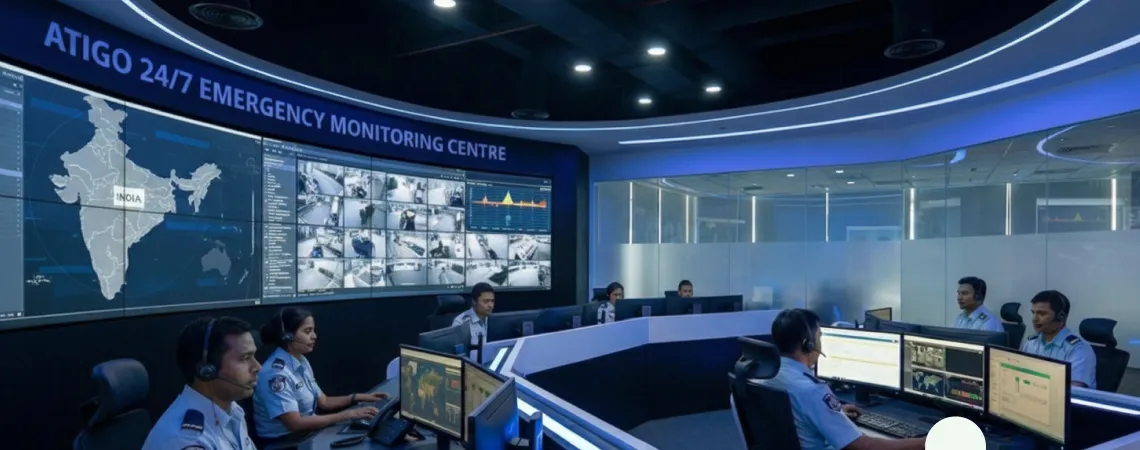
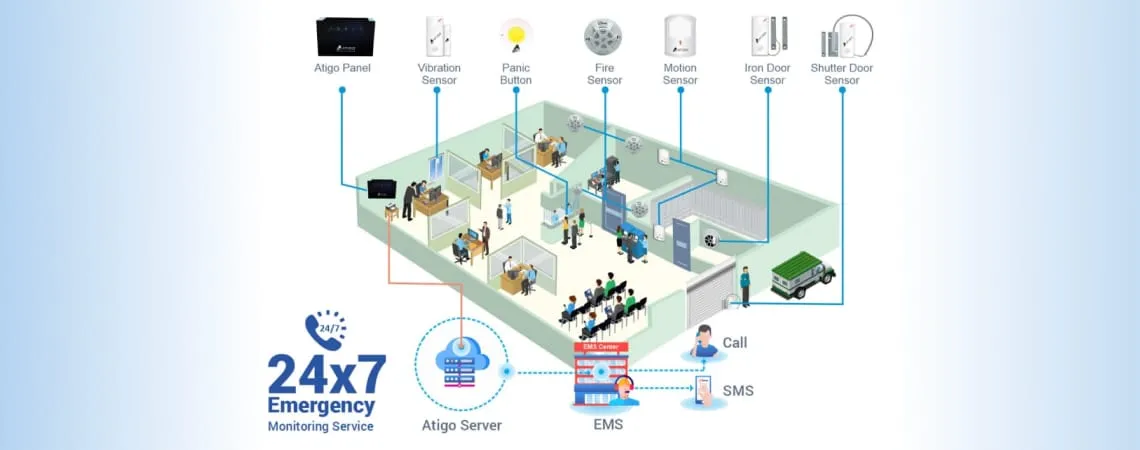
24/7 professional security monitoring center for Indian bank branches with trained operators responding to sensor alerts in real-time

Professional 24/7 monitoring fundamentally changes the equation. It’s the difference between discovering a break-in after it happens and stopping it while it’s happening.

1. Immediate Intrusion Detection and Verified Response

Here’s what happens when your monitored alarm system detects unusual activity at 2:47 AM:

Within 60 seconds

  • Alarm signal transmitted to professional monitoring center
  • Multiple sensors analyzed: Door contact, glass break, motion—pattern confirms genuine intrusion
  • Trained operator evaluates situation using established protocols
  • Owner notification via multiple channels (call + SMS + app notification)
  • Police dispatch initiated with confirmed break-in details

Within 5-8 minutes

  • Police arrive on scene with verified emergency (not just “possible alarm”)
  • Criminals surprised during act (most abort when they realize immediate response)
  • Inventory secured before significant loss
  • Suspects potentially apprehended in or near premises

This is precisely what happened in the Uttar Pradesh warehouse case study: intrusion detected at 2:47 AM, monitoring center verified within 60 seconds, police arrived within 8 minutes, three suspects arrested with ₹1+ crore worth of merchandise still at the scene.

The Critical Difference

Without monitoring, criminals have 6-8 hours before discovery. With monitoring, they have less than 10 minutes before police arrival. That’s the difference between losing everything and losing nothing.
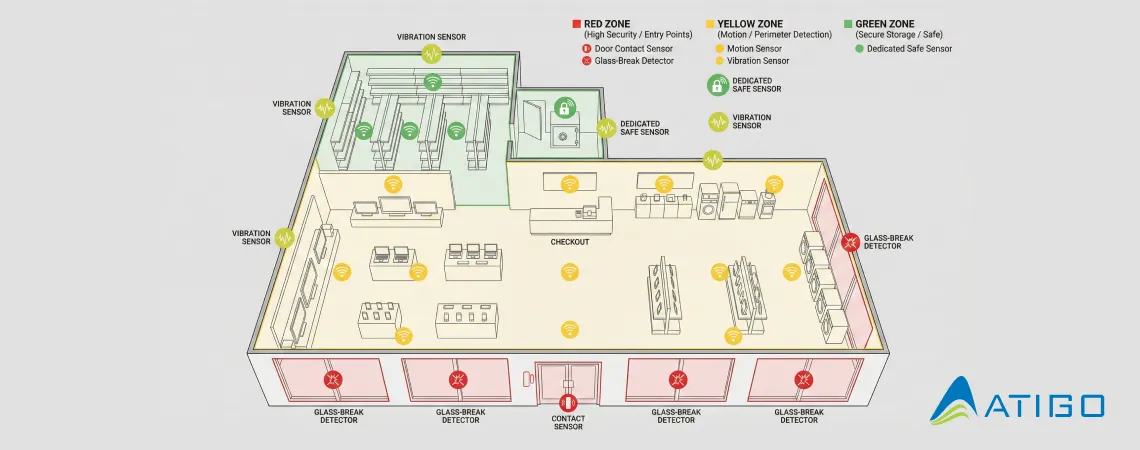
2. Sensor-Based Early Warning Systems

Electronics store sensor placement diagram showing door contacts, motion sensors, and glass-break detectors for comprehensive after-hours protection

Modern monitored security systems use multiple layers of detection specifically designed for after-hours protection:

Perimeter Protection

  • Door/window contact sensors: Instant alert when entry points are opened or forced
  • Glass-break detectors: Acoustic sensors trigger before criminals fully enter
  • Vibration sensors: Detect wall demolition attempts (critical after Chandigarh/Jalandhar cases)
  • Fence/boundary sensors: Warning before criminals reach the building

Interior Detection

  • Motion sensors: Multiple detection zones identify movement patterns
  • Heat/thermal sensors: Detect human presence even in darkness
  • High-value area protection: Specific sensors for safes, stockrooms, display areas

Environmental Monitoring

  • Smoke/fire detection: Coordinated with intrusion monitoring
  • Water leak sensors: Protect inventory from flood damage
  • Temperature monitoring: Alert for HVAC failures that could damage stock

Unlike CCTV-only systems that require someone to actually watch video feeds, sensor-based systems trigger automatic alerts that demand immediate verification and response. There’s no footage to review later—the system forces action in real-time.

3. After-Hours Protection as Core Mission

For electronics stores, the highest-risk period is predictably when you’re closed. Professional monitoring centers structure their operations specifically for these critical hours:

24/7/365 Operation

  • No holidays, weekends, or “off hours”
  • Overnight shifts fully staffed with trained security professionals
  • Redundant communication systems (phone, SMS, mobile app, backup connections)
  • Direct lines to local police departments and private security response teams

Faster Than You Can Respond

From your home bed to your store during a 3 AM break-in: 30-60 minutes

From monitoring center alert to police dispatch: under 2 minutes

No Sleep Dependency

You need rest. Your business doesn’t stop needing protection. Monitoring centers operate with fresh, alert personnel around the clock—nobody’s groggy, distracted, or unavailable.

4. Police Priority and Credibility

This is perhaps the most underestimated advantage of professional monitoring: police actually respond

Verified vs. Unverified Alarms

  • Unverified alarm (self-monitored): “Possible break-in, owner reports alarm” → Low priority, delayed response, sometimes no response
  • Verified alarm (professionally monitored): “Confirmed intrusion, multiple sensors triggered, professional verification” → High priority, immediate dispatch

Many Indian police departments have formal policies requiring verification before dispatching to alarm calls. Without monitoring, you’re on your own. With monitoring, you have institutional credibility that gets immediate law enforcement attention.

Evidence Documentation

  • Professional monitoring services maintain detailed logs:
  • Exact time of intrusion
  • Which sensors triggered (entry point identification)
  • Verification steps taken
  • Communication timestamps
  • Response coordination details

This documentation strengthens police investigations and insurance claims significantly.

5. Deterrence Through Signage

Professional monitoring isn’t just about catching criminals—it’s about preventing them from trying:

Visible Deterrence

  • “24/7 Professional Monitoring” signage at entry points
  • Monitoring company decals on windows/doors
  • Clear indication that immediate response is guaranteed

Professional burglars conduct surveillance before targeting stores. When they see professional monitoring indicators, they often move to softer targets. Why risk a store where police will arrive in under 10 minutes when there are unmonitored stores nearby?

6. Pattern Analysis and Intelligence

After-hours monitoring generates valuable security intelligence:

Incident Data

  • Failed break-in attempts logged and analyzed
  • Peak vulnerability times identified
  • Suspicious activity patterns noted
  • Coordinated attack attempts revealed

This intelligence helps you:

  • Optimize sensor placement
  • Identify physical security weaknesses
  • Coordinate with nearby businesses facing similar threats
  • Provide actionable information to police about criminal patterns

The Financial Case: ROI That Makes Sense

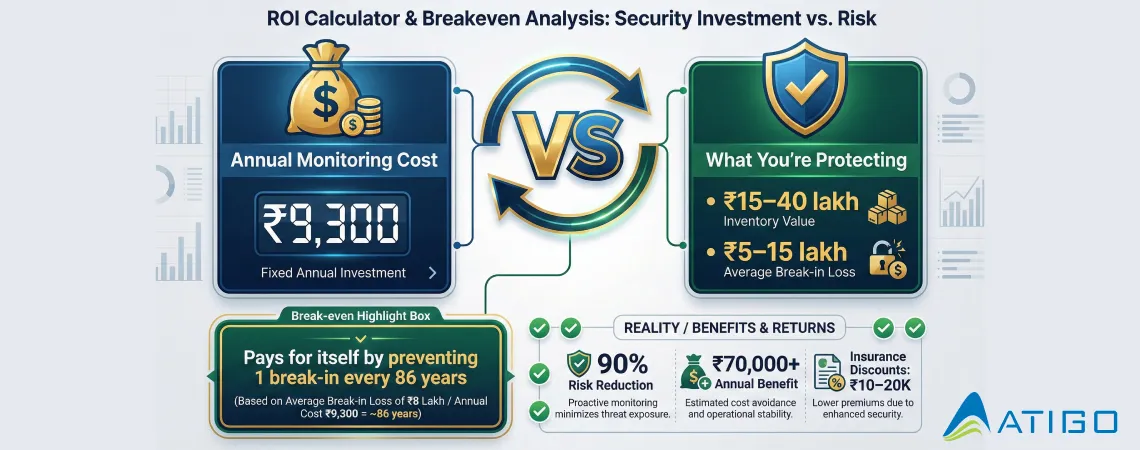
ROI calculator showing 24/7 monitoring at ₹9,300 annually protects ₹15-40 lakh inventory with ₹70,000+ net benefit

💰 BOTTOM LINE: THE NUMBERS

Investment:

  • ₹780/month (₹660 + GST)
  • ₹9,300/year
  • ₹46,500 over 5 years

What You’re Protecting:

  • ₹15–40 lakh inventory
  • ₹5–15 lakh average break-in loss
  • ₹10–25 lakh total cost per incident (including indirect costs)

Break-Even:
Monitoring pays for itself if it prevents just ONE break-in every 86 years.

Reality Check:

  • Unmonitored stores: 5–15% annual break-in risk
  • Monitored stores: <1% successful break-in risk
  • Expected annual benefit: ₹70,000+

Insurance Bonus:
10–20% premium discount = ₹10,000–20,000 annual savings (offsets 60–90% of monitoring cost)

You’re paying ₹25–30/day to protect ₹15–40 lakh in inventory. That’s not a cost — it’s essential business insurance.

Quantifying the Cost of a Single Break-In

Complete Break-In Cost Breakdown (Beyond Merchandise Loss)

Cost Category Typical Range Notes
Direct Merchandise Loss ₹3,50,000 – ₹18,00,000 10–50 smartphones, 5–10 laptops, accessories
Property Damage ₹50,000 – ₹2,00,000 Wall demolition, broken doors, damaged fixtures, broken windows
Insurance Deductible ₹25,000 – ₹1,00,000 Out-of-pocket before insurance pays
Premium Increase (Year 1) ₹15,000 – ₹40,000 20–40% annual premium increase
Premium Increase (Years 2–5) ₹60,000 – ₹1,60,000 Cumulative impact over five years
Repair Downtime Loss ₹1,00,000 – ₹5,00,000 3–7 days closed for repairs, lost sales
Emergency Inventory Replacement +15–25% Higher costs due to urgent procurement
Security System Replacement ₹30,000 – ₹1,00,000 If DVR, cameras, or sensors are damaged or stolen
Legal / Administrative Time ₹25,000 – ₹75,000 40–60 hours of owner/manager time @ ₹500–1,000/hr
Staff Turnover ₹50,000 – ₹2,00,000 Hiring and training after employee exits due to incident stress
Reputation Damage Unquantifiable Customers perceive the location as unsafe
Owner Stress / Health Unquantifiable Sleep disruption, anxiety, long-term health impact
TOTAL TYPICAL COST ₹7,05,000 – ₹30,75,000 Average: ₹15–18 lakh per incident

Compare to Monitoring

  • 5 years of 24/7 monitoring: ₹46,500 total
  • Single break-in cost: ₹15-18 lakh average
  • Break-even: Monitoring pays for itself preventing just ONE break-in every 300+ years
  • Actual prevention rate: 80-93% risk reduction

The Question: Can you afford to NOT be monitored?

Before examining monitoring costs, understand what a single after-hours burglary actually costs your electronics store:

Direct Inventory Loss (Typical Break-in)

  • 10 high-end smartphones: ₹1,50,000-₹8,00,000
  • 5 laptops: ₹1,50,000-₹8,00,000
  • Smartwatches and accessories: ₹50,000-₹2,00,000

Total merchandise loss: ₹3,50,000-₹18,00,000

This is conservative—the Chandigarh case lost ₹10 lakh, Jalandhar ₹7 lakh, and these were single-location incidents. The UP warehouse case involved over ₹1 crore at risk.

Indirect Costs (Often Overlooked)

  • Property damage repair: ₹50,000-₹2,00,000 (wall demolition, broken doors, damaged fixtures)
  • Insurance deductible: ₹25,000-₹1,00,000
  • Insurance premium increases: 20-40% annual increase for 3-5 years after claims
  • Lost sales during repairs: ₹1,00,000-₹5,00,000 (store closed for repairs)
  • Emergency inventory replacement: Higher procurement costs due to urgency
  • Staff morale and retention: Employees leave after traumatic break-ins
  • Customer confidence: Visible damage/repairs signal “unsafe location”

Opportunity Costs

  • Time spent dealing with police reports, insurance claims, repairs (40-60 hours owner/manager time)
  • Inventory shortages during peak sales periods
  • Reputation damage in local business community

Total Cost of Single Break-In: ₹5,00,000-₹25,00,000

The Monitoring Investment: Breaking Down the Numbers

Professional 24/7 monitoring services with sensor-based intrusion detection start at:

Atigo's Verified Pricing

Now do the mathematics:

This covers professional monitoring center operations, immediate alarm verification, police coordination, and multi-channel owner notifications.

  • Starting from ₹660 + GST per month for sensor-based 24/7 monitoring
  • Annual cost: ~₹9,300 (including 18% GST)

Break-Even Analysis

  • Average break-in loss: ₹8,00,000
  • Annual monitoring cost: ₹9,300

Actual Protection Math

  • Electronics stores WITHOUT monitoring face break-in risk estimated at 5-15% annually (industry data)
  • Electronics stores WITH monitoring face successful break-in risk of less than 1% annually

Risk reduction: 80-93%

If unmonitored stores in your market have a 10% annual break-in probability:

  • Your expected annual loss: ₹80,000 (10% × ₹8,00,000 average loss)
  • Your annual monitoring cost: ₹9,300

Net benefit: ₹70,700 annually

With monitored systems reducing risk to under 1%:

  • Your expected annual loss: ₹8,000 (1% × ₹8,00,000)
  • Your annual monitoring cost: ₹9,300
  • Even in this conservative scenario, you’re paying ₹1,300 more for 90% risk reduction and complete peace of mind

Insurance Benefits: Direct Financial Returns

Commercial insurance providers in India offer premium discounts for professionally monitored security systems

Typical Discounts

  • Basic alarm: 5-10% premium reduction
  • Monitored alarm + sensors: 10-15% premium reduction
  • Comprehensive monitored system: 15-20% premium reduction

Real Numbers

Annual electronics store insurance premium (Delhi NCR): ₹75,000-₹1,50,000

With 15% monitoring discount: ₹11,250-₹22,500 savings

Result

Insurance savings alone can cover 60-90% of monitoring costs—before considering theft prevention value.

The "One Break-In" Rule

Here’s the simplest way to think about monitoring ROI:

If monitoring prevents just ONE successful break-in during your business lifetime, it has paid for itself 20-50 times over.

Given that after-hours break-ins represent the highest risk for electronics stores, and monitoring reduces this risk by 80-93%, the financial case is overwhelming.

What About "It Won't Happen To Me"?

According to AIMRA, mobile and electronics retailers report shrinkage averaging ₹5,00,000-₹10,00,000 per month—much of this from after-hours theft. That’s not isolated incidents—that’s systematic, widespread targeting.

The question isn’t “Will I be targeted?” The question is “When will I be targeted, and will I be protected?”

The India Context: Why 2026 Demands Upgraded After-Hours Protection

Electronics Retail: India's High-Stakes Target Environment

India’s electronic security market growth tells a compelling story about rising threats. According to market research:

  • The sector reached $2.1 billion in 2024
  • Projected to reach $3.5-14.28 billion by 2031-2033
  • Growing at 5.6-23.57% CAGR depending on segment

This isn’t just market growth—it’s a direct response to escalating threats. As India’s electronics retail sector expands (driven by rising middle-class purchasing power and digital adoption), so does criminal targeting of these high-value inventories.

Urban Density Creates After-Hours Vulnerability

India’s rapid urbanization has created ideal conditions for after-hours electronics store burglaries:

High-Density Urban Environments

  • Stores in Mumbai, Delhi, Bangalore, Hyderabad operate in densely packed commercial areas
  • Multiple adjacent businesses share walls—common entry point for wall-demolition burglaries
  • Noise from street traffic and neighboring establishments mask break-in sounds
  • Residential areas nearby but residents hesitant to intervene (personal safety concerns)

Predictable Business Hours

  • Most electronics stores close 9-10 PM, reopen 10-11 AM daily
  • Festival closures create extended unmanned periods
  • Criminals can easily surveil and identify optimal targeting windows

Mixed-Use Building Challenges

  • Stores on ground floor, residential units above (but occupants sleep through alarms)
  • Shared walls with less-secure adjacent businesses provide alternate entry
  • Building security guards (if present) focus on residential access, not commercial after-hours

Transportation Networks Enable Quick Dispersal

India’s improving infrastructure paradoxically increases electronics burglary risk

Rapid Merchandise Dispersal

  • National Highway network connects cities within hours
  • Stolen goods from Chandigarh can reach Delhi (250 km) in under 4 hours
  • Mumbai stolen inventory dispersed across Maharashtra before morning
  • Inter-state transport means local police jurisdiction challenges

Grey Market Ecosystem

According to Bangalore police investigating mobile thefts, India’s extensive refurbished electronics market provides ready buyers:

  • Stolen high-end phones disassembled within 24 hours
  • Components sold across multiple states
  • Complete devices sold intact in tier-2/tier-3 cities
  • Online marketplaces facilitate anonymous resale

Timeline Reality

  • Break-in at 3 AM in Pune
  • Merchandise on truck by 4 AM
  • Goods reach Mumbai by 7 AM
  • Distributed across 15+ grey market dealers by 10 AM
  • Store owner discovers break-in at 10:30 AM – 7.5 hours too late

Without immediate detection and response, your inventory is unrecoverable

Law Enforcement Response Challenges

Indian police face resource constraints that make unverified alarms problematic

Verification Requirements

  • Many stations deprioritize unverified alarm calls (too many false alarms)
  • Professional monitoring verification provides credibility that gets priority response
  • Direct monitoring center-to-police communication accelerates dispatch

After-Hours Reality

  • Reduced overnight patrol presence in commercial areas
  • Response time variability: 10-45 minutes depending on location/time
  • Without verification, response often delayed pending “confirmation”

The Monitoring Advantage

Professional monitoring centers with established police relationships can cut response times dramatically—the UP warehouse case showed 8-minute arrival, but that required immediate verified dispatch at 2:47 AM.

AIMRA Data: The Shrinkage Explosion

The All India Mobile Retailers Association reports that member retailers have experienced devastating shrinkage increases:

Five Years Ago

  • Typical monthly shrinkage: ₹50,000-₹1,00,000
  • Manageable within normal retail operating costs
  • Insurance coverage adequate

Today

  • Typical monthly shrinkage: ₹5,00,000-₹10,00,000
  • 10x increase in five years

  • Insurance costs skyrocketing

  • Some retailers exiting business entirely

Primary Cause

After-hours break-ins and sophisticated employee theft (often insider-coordinated with external criminals) during unmanned periods.

AIMRA chairman Kailash Lakhyani specifically notes shrinkage spikes during:

  •  IPL season (April-May)—distracted security attention
  • Festival seasons (Diwali, Dussehra)—extended closure periods
  • Summer months (May-June)—reduced foot traffic creates targeting opportunities

All of these are time-based vulnerabilities that 24/7 monitoring directly addresses.

Insurance Market Tightening

As break-ins increase, insurance companies are essentially forcing monitoring adoption through pricing—it’s becoming cheaper to monitor than to remain unmonitored and pay higher premiums.

Market Reality

  • 10-20% discounts for monitored systems
  • Lower deductibles for professionally protected premises
  • Preferred risk status for comprehensive security

Prevention Incentives

  • 20-40% premium increases standard
  • Some retailers deemed “uninsurable” after multiple incidents
  • Higher deductibles imposed
  • Coverage limits reduced

After Break-In

Indian commercial insurance providers are becoming increasingly stringent

Digital Payment Infrastructure Creates New Risks

Burglars who previously targeted bank branches or ATMs now focus on electronics retailers—better risk/reward ratio when stores are unmanned

The Targeting Shift

  • Reduced cash holdings make cash-focused burglars target inventory instead
  • Electronics are “better than cash”—compact, high-value, easy resale
  • No serial number tracking on components once disassembled
  • Grey market demand ensures instant liquidity

Cash vs. Inventory

India’s digital payment revolution (UPI, digital wallets, online transactions) means electronics stores now hold less cash—but this makes inventory theft even more attractive:

Smart Cities, Dumb Security?

India’s Smart Cities Mission emphasizes digital infrastructure, but often overlooks after-hours commercial security

The Gap

  • Public CCTV coverage focuses on streets, not store interiors
  • Municipal surveillance doesn’t provide after-hours alarm monitoring
  • Police incident response still requires triggering (call, verified alarm)

Your Responsibility

Government infrastructure won’t protect your unmanned store. Private professional monitoring fills this critical gap between public safety systems and business protection needs.

What to Look For in a Monitoring Service Provider

✅ WHAT TO DEMAND FROM YOUR MONITORING PROVIDER

Non-Negotiables for Electronics Stores:

  1. Sensor-based intrusion detection (not camera-dependent)
    • Door/window contacts, glass-break detectors, motion sensors
    • Vibration sensors for wall demolition attempts
  2. 60-second verification protocol
    • Multi-sensor correlation (not a single trigger)
    • Professional threat assessment
  3. Proven after-hours response capability
    • Direct police coordination in your area
    • Documented 8–15 minute response times
  4. Transparent pricing
    • Clear monthly cost (no hidden fees)
    • Written service-level agreement (SLA)
    • Insurance discount documentation
  5. Local India operations
    • Monitoring centers located within India
    • Understanding of local police procedures
    • Hindi / English customer support

🚫 Red Flags to Avoid:

  • ❌ Providers with vague “we monitor your system” promises
  • ❌ Long-term contracts (3+ years) with heavy exit penalties
  • ❌ Camera-only security (sensors are essential after hours)
  • ❌ No specific response-time commitments

Not all monitoring services are created equal, especially when your primary need is after-hours break-in prevention. When evaluating providers for your electronics or IT store, insist on these critical capabilities:

1. Advanced Sensor-Based Intrusion Detection

The foundation of effective after-hours monitoring is comprehensive intrusion detection. Look for systems that integrate

Entry Point Protection

  • Door/window contact sensors: Magnetic switches that detect opening, forced entry, or removal
  • Shutter sensors: For roller shutters common in Indian retail
  • Glass-break detectors: Acoustic sensors that detect breaking glass (critical for storefront windows)
  • Vibration sensors: Detect attempts to breach walls or ceilings (essential after Chandigarh/Jalandhar incidents)

Interior Detection

  • Passive Infrared (PIR) motion sensors: Detect movement in protected zones
  • Dual-technology sensors: Combine PIR with microwave detection for fewer false alarms
  • Perimeter protection: Create detection zones before criminals reach high-value areas
  • Panic buttons: Silent alerts for staff in emergency situations

High-Value Area Protection

Transportation Networks Enable Quick Dispersal

  • Safe/vault sensors: Specific protection for cash storage
  • Stockroom monitoring: Dedicated sensors for inventory storage areas
  • Server room protection: For businesses with digital infrastructure

Critical for Electronics Stores

The system MUST be sensor-based, not camera-dependent. Cameras can be disabled, masked, or avoided. Physical sensors provide redundant detection that criminals cannot easily bypass. Look for AIoT (AI + IoT) sensor technology that uses intelligent algorithms to distinguish between genuine threats and environmental factors.
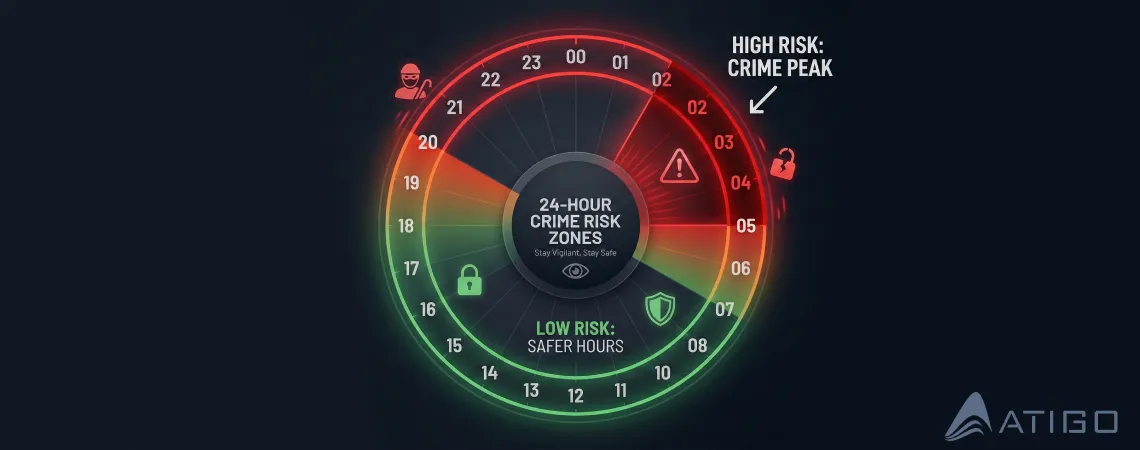
2. Proven After-Hours Response Capability

Clock showing 50% of electronics store crimes occur between 8 PM and 4 AM when stores are closed

Since 50%+ of electronics store crimes occur between 8 PM-4 AM, your monitoring provider must demonstrate excellence in overnight operations:

24/7/365 Staffed Operations

  • Verify they maintain dedicated overnight shifts (not automated-only)
  • Ask about average response time during 2-5 AM window specifically
  • Confirm redundant communication systems if primary fails

Rapid Verification Protocols

  • Under 60 seconds from alarm to verification decision
  • Multi-sensor correlation (not relying on single trigger)
  • Clear escalation procedures for different threat types

Police Coordination

  • Direct relationships with local police stations in your area
  • Documented response time histories
  • Protocol for providing precise location/entry point information
  • Ability to remain on call with police during response

Owner Notification

  • Multiple communication channels (call + SMS + app)
  • Ability to reach designated contacts in priority order
  • Real-time updates as situation develops

Ask potential providers: “Walk me through exactly what happens if my alarm triggers at 3 AM on a Sunday.” Their answer will reveal their actual capabilities.

3. Certified Monitoring Center Infrastructure

Your monitoring service should operate through professional-grade facilities

UL or Equivalent Certification

  • Certification demonstrates adherence to international standards
  • Regular audits ensure consistent operational quality
  • ISO 9001 quality management compliance

Redundant Systems

  • Backup power (generators + UPS)
  • Redundant internet connectivity (multiple ISPs)
  • Backup monitoring center if primary fails
  • Data backup and recovery protocols

Geographic Considerations

Ideally, monitoring centers should be located within India (preferably same region) for:

  • Better local police coordination
  • Appropriate response to regional power/communication outages
  • Understanding of local criminal patterns

4. Multi-Channel Communication and Mobile Access

Modern monitoring services should offer comprehensive communication

Mobile App Features

  • Real-time system status (armed/disarmed)
  • Instant alert notifications
  • Live camera viewing (if cameras integrated)
  • Remote arm/disarm capability
  • Event history access

SMS Alerts

  • Backup notification if app fails
  • Critical event summaries
  • System health notifications

Voice Communication

  • Direct calls from monitoring center during alarms
  • Two-way voice in some advanced systems
  • Ability to call into monitoring center for verification

Email Reports

  • Daily system health summaries
  • Monthly incident reports
  • Annual security analysis

5. Integration with Existing and Future Security Systems

Your monitoring service should work seamlessly with

Current Equipment

  • Existing sensor infrastructure (minimize replacement costs)
  • Current alarm panel (if adequate)
  • Any installed CCTV systems

Future Additions

  • Access control systems (smart locks, biometric readers)
  • Fire and environmental monitoring
  • Integration with inventory management systems
  • Expansion as you open new locations

Avoid Proprietary Lock-In

  • Beware of providers requiring all-proprietary equipment
  • Ensure you can upgrade/expand with industry-standard devices
  • Verify data portability if you ever switch providers

6. Transparent Pricing and Contract Terms

– Written service level agreements (SLAs)

– Clear pricing: equipment + installation + monthly monitoring

– Flexible contract terms (annual preferred, avoid multi-year lock-ins)

– Money-back trial period (30-60 days)

– Documented response protocols and performance metrics

What to Demand

– Vague promises about “monitoring your system”

– No specific response time commitments

– Unclear escalation procedures

– No documentation of police coordination

Unclear Response Protocols

  • “Free equipment” that masks inflated monthly fees
  • Per-event charges for alarm activations
  • Upgrade fees for adding sensors
  • Early termination penalties exceeding 3 months of service

Hidden Costs

Red flags to avoid

7. Track Record and References

Before committing, verify the provider’s credibility

References from Similar Businesses

  • Ask for references from other electronics/mobile stores
  • Specifically request feedback on after-hours incidents
  • Ask about false alarm rates and police response coordination

Incident History

  • How many attempted break-ins have they detected and prevented?
  • What’s their average police response coordination time?
  • Can they share de-identified case studies?

Local Reputation

  • Check with local electronics retailers’ associations
  • Search for online reviews (but be aware of fake reviews)
  • Verify business registration and operational history

For Bangalore/Mumbai/Delhi retailers: Ask specifically about experience with local police departments in your district—established relationships make a significant difference in response times.

Implementation Strategy: Getting It Right

Assessment Phase

Before implementing 24/7 monitoring, conduct a thorough security assessment:

  1. Identify vulnerabilities: Which areas of your store are most at-risk?
  2. Review incident history: What types of theft have you experienced?
  3. Evaluate existing systems: What equipment do you already have?
  4. Define priorities: What assets need the highest level of protection?

Many monitoring service providers offer complimentary security assessments as part of their sales process.

System Design

Work with your chosen provider to design a monitoring solution that addresses your specific needs:

  • Sensor placement: Strategic positioning for maximum coverage without blind spots
  • Camera integration: Focus on high-value areas, entry/exit points, and cash handling zones
  • Alarm zones: Logical grouping that enables targeted responses
  • Access control: Restricted area protection for stockrooms, offices, safes

For electronics stores, pay special attention to display areas with smartphones, laptops, and gaming equipment.

Staff Training

Your monitoring system is only as effective as your team’s ability to work with it

  • Arming/disarming procedures: Proper protocols to minimize false alarms
  • Duress codes: Special codes that indicate you’re being forced to disarm the system
  • Response protocols: What to do when the monitoring center calls during an alarm
  • System limitations: Understanding what the system can and cannot detect

Regular refresher training ensures protocols don’t get forgotten over time.

Testing and Optimization

After installation, test your system thoroughly

  • Trigger each sensor to verify proper communication with the monitoring center
  • Conduct mock incidents to evaluate response times and protocols
  • Review communication channels to ensure alerts are received
  • Adjust sensor sensitivity to reduce false alarms without compromising detection

Schedule periodic tests (quarterly or semi-annually) to maintain system reliability

The 2026 Security Mindset: Prevention Over Reaction

As we move deeper into 2026, the most successful electronics and IT retailers are those who’ve shifted from reactive to proactive security thinking.

Reactive thinking: “I’ll deal with theft when it happens. Insurance will cover it.”

Proactive thinking: “I’ll invest in prevention now to ensure theft doesn’t happen—and if it does, I’ll detect and respond immediately.”

24/7 professionally monitored security systems embody this proactive approach. They’re not waiting for something to go wrong—they’re actively preventing it, minute by minute, hour by hour.

This mindset shift recognizes that:

  • Every theft prevented is more valuable than every theft prosecuted
  • Employee and customer safety cannot be recovered after an incident
  • Business reputation built over years can be damaged in a single violent theft incident
  • Time and energy spent on security incidents is time not spent growing your business

Real-World Impact: The Case for Prevention

Case Study: How 8 Minutes Changed Everything

Location: White goods warehouse, Uttar Pradesh 

Time: 2:47 AM, Saturday 

System: AIoT sensor-based alarm with 24/7 professional monitoring

What Happened

Police arrived on-site within 8 minutes of initial detection. Three individuals were apprehended in the act of loading appliances worth over ₹1 crore into a waiting truck

Multiple sensors detected unauthorized entry through a side door. Within 60 seconds, the monitoring center:

  • Received intrusion alerts from door contact and motion sensors
  • Verified no authorized personnel were scheduled on-site
  • Confirmed break-in pattern (multiple zones triggered in sequence)
  • Notified local police with exact location and entry point details
  • Alerted warehouse owner via phone and mobile app

The Alternative Scenario (Without Monitoring)

If this warehouse had only an unmonitored alarm system with CCTV:

  • Break-in occurs at 2:47 AM → Alarm sounds locally but nobody’s listening
  • Owner discovers break-in at 9:00 AM (6+ hours later) when arriving for work
  • Merchandise already distributed across state lines
  • CCTV footage shows masked individuals
  • Police investigation begins, but recovery unlikely
  • Total loss: ₹1+ crore

The Reality (With Monitoring)

  • Total loss: ₹0
  • Arrests made: 3 suspects
  • Merchandise secured: 100% recovery
  • Business disruption: Minimal

This is what 24/7 monitoring delivers: prevention, not just documentation

The Pattern Across India: Break-ins Thwarted

While unsuccessful break-ins rarely make headlines, monitoring companies report dozens of prevented burglaries monthly:

Mumbai Electronics District (Lamington Road area)

Multiple stores with monitored systems report attempted after-hours entries detected and stopped before merchandise loss—police response times averaging 10-15 minutes prevent completion of thefts.

Bangalore Mobile Store Chain

Monitoring system detected attempted roof access at 3:20 AM. Police arrived within 12 minutes, suspects fled but no entry achieved. Subsequent investigation revealed the same gang had successfully burgled three unmonitored stores in the prior month.

Delhi NCR Multi-Brand Electronics Outlet

Glass-break sensor triggered at 1:45 AM. Monitoring verification showed broken display window. Police dispatch resulted in arrival during active burglary—two suspects apprehended with merchandise, third suspect fled.

What The Statistics Don't Show

Official crime statistics measure reported crimes —break-ins that actually occurred. What they don’t capture is prevention:

  • Attempted break-ins detected and stopped before entry
  • Criminals fleeing upon realizing immediate response is occurring
  • Deterrence effect of monitoring signage (unmeasurable but significant)
  • Insurance claims not filed because losses were prevented

For every mobile store burglary that makes the Tribune India headlines, monitoring systems across India are quietly preventing dozens more from ever becoming statistics.

Final Considerations: Evaluating Your After-Hours Vulnerability

For electronics and IT store owners evaluating 24/7 monitoring in 2026, ask yourself these critical questions:

1. What Happens at 3 AM?

Current State

  • Your store has ₹15-40 lakh in inventory sitting inside
  • Nobody is physically present
  • Your alarm system (if you have one) makes noise if triggered—but who’s listening?
  • Your CCTV cameras are recording—but who’s watching?
  • Burglars know they have 6-8 hours before you arrive

Question: If someone breaks through your wall right now (3 AM on a Tuesday), what actually happens? Who calls police? How long until anyone responds? What stops the criminals from loading everything into a truck?

If your answer involves “I hope someone hears the alarm” or “I’ll check the footage tomorrow,” you’re not protected—you’re just documented.

2. Can You Afford the Mathematics of After-Hours Risk?

The Numbers

  • 50%+ of electronics store crimes occur after hours
  • Average break-in loss: ₹5-15 lakh
  • Recovery rate: Under 15%
  • AIMRA-reported shrinkage: ₹5-10 lakh per month at major retailers
  • Mobile phone theft surge in Bangalore: 450% increase

Question: Can your business absorb a ₹10 lakh loss? What about a second break-in six months later? When does insurance become unaffordable or unavailable?

3. How Fast Can You Actually Respond?

Reality Check

  • You’re at home, asleep
  • Phone on silent or in another room
  • Break-in happens at 2:47 AM
  • Even if you see the notification: 30-60 minutes to reach your store
  • Burglary completes in 8-12 minutes

Question: In what scenario can you personally respond fast enough to prevent loss? The answer: you can’t. That’s why professional monitoring exists.

4. Is Your Current Security Theater or Protection?

Common "Security" That Doesn't Prevent After-Hours Break-ins

  • Unmonitored alarm that just makes noise
  • CCTV cameras recording for later review
  • Physical barriers that add 5 minutes to break-in time
  • One night security guard for a multi-entry building

Question: When criminals break in after hours, does your current security actually STOP them, or does it just document how they robbed you?

5. What's Your Backup Plan?

Official crime statistics measure reported crimes —break-ins that actually occurred. What they don’t capture is prevention:

If Your Current Approach Fails

  • Can you replace ₹10 lakh in stolen inventory immediately?
  • Will insurance cover full replacement at current market prices?
  • Can you afford 20-40% premium increases for 3-5 years?
  • Can your business survive being closed for repairs for 3-7 days?
  • What happens to employee morale and retention after a traumatic incident?

Question: If break-in prevention fails, what systems are in place to minimize damage? If the answer is “insurance,” remember that insurance pays after losses occur—it doesn’t prevent them.

6. Are You Comfortable Being the Soft Target?

Market Reality

  • Your competitor across town has 24/7 monitoring with “Protected by Professional Monitoring” signage
  • Criminal groups conduct surveillance before targeting stores
  • They’re choosing between your store and the monitored one
  • Which store do they pick?

Question: In a market where professional monitoring is becoming standard, can you afford to be the unmonitored exception that criminals specifically target?

7. What's the True Cost of Sleepless Nights?

The Hidden Cost Nobody Discusses

  • Anxiety every time you leave the store for the night
  • Checking your phone constantly when away
  • Cutting vacations short over security concerns
  • Never fully relaxing because part of your mind is always worried

Question: What’s the mental health cost of operating without adequate after-hours protection? How much is peace of mind actually worth?

Making the Decision

If even two of these questions made you uncomfortable, it’s time to seriously consider professional monitoring

The electronics retail security equation in 2026 is straightforward:

Your highest-value inventory (compact, easily transported, instantly resaleable)

Your highest-risk period (after hours when unmanned)

Your longest response delay (6-8 hours from break-in to discovery)

Your lowest recovery probability (under 15% for stolen electronics)

Essential need for 24/7 professional monitoring 

The investment is modest (starting at ₹660 + GST per month). The protection is comprehensive (immediate detection, verification, and police dispatch). The alternative is financially catastrophic and emotionally exhausting.

Your store’s most dangerous hours are the ones when you’re not there. It’s time to ensure someone is always watching.

Conclusion: Your Store's Most Dangerous Hours Demand Professional Protection

In 2026, 24/7 professionally monitored security systems for electronics and IT stores aren’t about paranoia—they’re about mathematical reality.

The numbers tell the story

  • 50%+ of electronics store crimes occur after hours (8 PM-4 AM)
  • 8-12 minutes average time from break-in to exit with merchandise
  • Less than 15% recovery rate for stolen electronics even with CCTV evidence
  • 2:47 AM – the exact moment the UP warehouse monitoring system detected intrusion and prevented ₹1+ crore loss

Your store’s inventory—compact, high-value, instantly resaleable—makes you a prime target. The predictability of your closed hours gives criminals the time window they need. The sophistication of modern burglary tactics (wall demolition, DVR targeting, coordinated teams) means physical barriers alone cannot protect you.

The question is brutally simple

When burglars breach your store at 3 AM, who’s watching? Who’s verifying? Who’s calling police? Who’s responding?

  • Without 24/7 monitoring: Nobody. You discover the break-in 6-8 hours later. Merchandise is gone. Recovery is unlikely. Loss is total.
  • With 24/7 monitoring: Professional operators verify intrusion within 60 seconds. Police dispatch occurs within 2 minutes. Response arrives within 8-12 minutes. Criminals are caught or flee. Inventory is protected.

The investment is modest

Starting at just ₹660 + GST per month (approximately ₹780 monthly, ₹9,300 annually). Less than the cost of a single smartphone. A fraction of your insurance premium. Potentially offset by insurance discounts.

Compare that to break-in losses averaging ₹5-15 lakh per incident. Compare that to the AIMRA-reported shrinkage explosion from ₹1 lakh to ₹10 lakh monthly at mobile retailers. Compare that to the Chandigarh, Jalandhar, and countless unreported incidents happening across India every month.

The protection is substantial

  • Immediate detection through multiple sensor types
  • Professional verification eliminates false alarm delays
  • Coordinated police response with institutional credibility
  • After-hours protection when you’re most vulnerable
  • Documented evidence strengthening investigations
  • Deterrence effect reducing your target appeal

The alternative is simply too costly to risk

Every night you close your store without professional monitoring, you’re gambling. You’re betting that tonight won’t be the night. That your location won’t be selected. That your inventory won’t be targeted.

Professional burglars are betting differently. They’re betting that you’re asleep, that your alarm is unmonitored, that they have 6-8 hours before discovery. They’re betting that walls can be demolished, DVRs can be stolen, and merchandise can be loaded and distributed before you even know you’ve been hit.

Ask yourself these final questions

  1. Can you afford to lose ₹8-15 lakh in a single night?
  2. Can you respond to a break-in from your bed in under 10 minutes?
  3. Will police prioritize your unverified alarm at 3 AM?
  4. How many break-ins can your business survive before insurance becomes unaffordable or unavailable?
  5. What’s the real cost of sleepless nights wondering if tonight is the night?

The electronics retail security landscape in 2026 is clear

After-hours break-ins represent your highest risk. Professional criminals operate with precision during your most vulnerable hours. Recovery rates are abysmal. Insurance costs escalate after incidents. But prevention—real, active, 24/7 prevention—is both achievable and affordable.

The question isn’t whether your electronics store needs 24/7 monitoring. The question is: can you afford to remain unprotected during the 50%+ of the day when you’re at highest risk?

When it’s 2:47 AM and someone is breaking through your wall, the answer becomes painfully obvious.

Ready to Protect Your Electronics Store?

Don’t wait until you’re reviewing CCTV footage of your own burglary. Contact a certified security monitoring provider today to:

  • Conduct a vulnerability assessment of your store
  • Design a sensor-based intrusion detection system
  • Implement 24/7 professional monitoring
  • Secure your business during its most dangerous hours

Your store never closes its vulnerability. Your protection shouldn’t either.

About the Author: This article is based on extensive research into electronics retail security threats, after-hours burglary patterns, and professional monitoring best practices, incorporating data from law enforcement reports, industry associations including AIMRA, and verified incident case studies across India.

Sources

  1. All India Mobile Retailers Association (AIMRA) – Retail Shrinkage Reports (2024)
  2. Tribune India – Electronics Store Burglary Coverage (Chandigarh, Jalandhar incidents)
  3. Deccan Herald – Bangalore Mobile Phone Theft Analysis (2023)
  4. 3SI Security Systems – Electronics Store Crime Statistics
  5. Business Standard – Indian Retail Shrinkage Trends (2024)
  6. Centre for Retail Research – Global Retail Theft Barometer (India data)
  7. Multiple verified case studies including UP warehouse incident (₹1+ crore recovery)

Frequently Asked Questions (FAQs)

According to security industry data, more than 50% of electronics store crimes occur between 8 PM and 4 AM

Professional 24/7 monitoring for electronics stores in India starts at ₹660 plus GST per month (approximately ₹

  • Professional monitoring center operations 24/7/365
  • Immediate alarm verification within 60 seconds
  • Coordinated police dispatch for verified emergencies
  • Multi-channel owner notifications (call, SMS, mobile app)
  • System health monitoring and incident reporting

Many insurance providers offer 10-20% premium discounts for monitored systems, which can offset 60-90% of monitoring cost

With professionally monitored systems, police typically respond within 8-15 minutes for verified emergencies.
In the documented UP warehouse case, police arrived within 8 minutes of the 2:47 AM intrusion detection, preventing ₹
Without monitoring, unverified alarms receive significantly slower response or no police response at all, as many police departments

Less than 15% of stolen electronics are ever recovered, according to law enforcement data from Bangalore an
Here’s why recovery is so difficult:

  • Stolen high-end phones are disassembled within 24 hours
  • Individual components (screens, batteries, cameras) are sold separately across multiple states
  • Complete devices enter grey markets within 24-48 hours
  • Refurbished phone market makes tracing impossible
  • By the time break-in is discovered (6-8 hours later), merchandise has already been dispersed
  •  

Prevention through immediate detection is the only effective strategy.

No, CCTV cameras alone do not prevent break-ins —they only record evidence after the crime occurs.

Here’s what happens in real after-hours break-ins:

  • Chandigarh case: Store had CCTV, burglars  disabled the DVR
  • Jalandhar case: Cameras recorded the theft, but  ₹7 lakh merchandise was never recovered
  • Professional burglars mask identities or simply don’t care (recovery rates are so low)
 

The reality: Cameras document your losses but don’t stop them. They work best when integrated with monitored sensor-

Absolutely yes. Here’s the mathematics:
Break-Even Analysis: 

  • Annual monitoring cost: ₹9,300
  • Average break-in loss: ₹8,00,000
  • Monitoring pays for itself if it prevents just ONE break-in every 86 years


Actual Risk Analysis:

  • Unmonitored electronics stores: 5-15% annual break-in probability
  • With monitoring: <1% successful break-in risk
  • Expected annual benefit: ₹70,000+ in prevented losses
 

Additional benefits:

  • Insurance premium discounts: 10-20% (₹10,000-20,000 annually)
  • Peace of mind: No more anxiety when leaving store
  • Protection during vacations/holidays
  • Evidence for prosecution if incidents occur


Bottom line: You’re paying ₹25-30 per day for protection of ₹15-40 lakh in inventory. That’s not a cost—it’s an essential

Here’s the exact sequence when your monitored system detects intrusion at 3 AM:

Within 60 seconds

  • Alarm signal transmitted to monitoring center
  • Professional operator analyzes multiple sensor triggers (door contact, motion, glass-break)
  • Intrusion pattern confirmed (not false alarm)
  • Owner contacted via phone + SMS + mobile app notification

Within 2-3 minutes

  • Owner confirms they’re not on-site or incident is verified through sensor patterns
  • Police dispatched with “verified break-in” status
  • Monitoring center provides exact location, entry point, and ongoing updates

Within 8-12 minutes

  • Police arrive on-site
  • Criminals caught in act or flee (either way, theft is interrupted)
  • Merchandise secured, evidence preserved

Compare to unmonitored system

  • 3 AM: Alarm sounds locally (neighbors ignore it)
  • Owner asleep, phone on silent
  • 10 AM: Break-in discovered (7 hours too late)
  • Merchandise already dispersed across grey markets

Electronics stores are prime targets for professional burglars due to a perfect combination of factors:
High-Value, Compact Inventory:

  • Smartphones: ₹15,000-₹1,50,000 each, fits in pocket
  • Laptops: ₹30,000-₹2,00,000 each, easily stackable
  • Smartwatches/accessories: ₹10,000-50,000 each
  • ₹10-20 lakh total inventory in relatively small space

Rapid Resale Ecosystem:

  • Grey market buyers readily available
  • iPhone 15 screen alone: ₹50,000-60,000 in parts market
  • Complete devices sold within 24-48 hours
  • Disassembled parts untraceable across India

Predictable Unmanned Periods:

  • Consistent closing times (10-12 hours nightly)
  • Extended closures during festivals
  • Criminals can surveil and plan optimal timing

The AIMRA Data
All India Mobile Retailers Association reports shrinkage increased from ₹50,000-₹1,00,000 per month (five years ago)

Personal response is completely ineffective for after-hours break-ins. Here’s why:
Time Reality Check

  • Break-in duration: 8-12 minutes (entry to exit with merchandise)
  • Your response time from home: 30-60 minutes (wake up, get dressed, drive to store)
  • Police response to unverified alarm: 45+ minutes or no response

By the time you arrive, the burglary is already complete.


The Real Scenario

  • 2:47 AM: Alarm notification on your phone
  • You’re asleep (phone on silent or in another room)
  • 7:30 AM: You wake up and see missed notifications
  • 8:30 AM: You arrive at store
  • 5 hours 43 minutes too late

Additional Problems

  • Police won’t respond to unverified alarms (high false-alarm rate)
  • Arriving during active burglary puts you at personal risk
  • No backup if you’re traveling, sick, or unavailable
  • Alert fatigue: After 3-4 false alarms, you’ll start ignoring notifications
  •  

Professional monitoring solves all of this

  • 24/7 staffed operations (never asleep)
  • 60-second verification (eliminates false alarms)
  • Police respond to verified emergencies
  • Coordination even when you’re unavailable
  •  

Cost comparison

  • DIY response: ₹0/month, but averages ₹8 lakh loss when break-in occurs
  • Professional monitoring: ₹780/month, prevents the loss entirely

Typical electronics store break-ins result in ₹5-15 lakh in direct merchandise loss, with total costs often exceed
Recent Verified India Cases

  • Chandigarh mobile store (Sector 22): ₹10 lakh + DVR stolen
  • Jalandhar mobile shop: ₹7 lakh + property damage
  • UP warehouse (prevented): ₹1+ crore at risk (monitoring stopped it)

AIMRA Industry Data

All India Mobile Retailers Association reports member retailers averaging ₹5-10 lakh monthly shrinkage, with signific

Total Cost Breakdown (Beyond Merchandise)

  • Direct loss: ₹5-15 lakh (inventory stolen)
  • Property damage: ₹50,000-₹2,00,000 (wall demolition, broken doors, damaged fixtures)
  • Insurance deductible: ₹25,000-₹1,00,000
  • Premium increases: 20-40% annually for 3-5 years (₹50,000-₹2,00,000 over time)
  • Lost sales during repairs: ₹1,00,000-₹5,00,000 (store closed 3-7 days)
  • Emergency replacement costs: Higher procurement costs due to urgency
  • Staff morale impact: Potential employee turnover after traumatic incident
  • Customer perception: Visible damage signals “unsafe location”

Realistic total impact: ₹10-25 lakh per incident
With 24/7 monitoring: These costs are completely avoided through prevention.