Imagine it’s 3:00 AM.
Your shop is closed. The shutters are down. Everything seems secure.
Then suddenly someone breaks in.
Your alarm system detects it instantly and sends a notification to your phone.
But your phone is on silent.
Or you’re asleep.
Or the alert gets lost among dozens of other notifications.
By the time you notice…
The damage is already done.
This is the hidden risk of app based security systems in India they depend entirely on your response during emergencies.
Most business owners believe that receiving instant alerts means they are fully protected.
But in reality, alerts alone don’t stop crime action does.
Most burglaries are completed within 7–15 minutes, which leaves very little time to:
In real-world situations, this delay becomes critical.
Modern security apps are smart and fast. They can detect:
But they all share one major limitation:
A notification is not protection it is only information.
Let’s break down the real risks.
In India, most business owners receive multiple alerts daily from different systems.
Over time, the brain starts ignoring them.
At night, when you are asleep, even important alerts can go unnoticed.
Even if you respond immediately, there is always a delay:
This entire process can take several minutes.
Meanwhile, intruders act much faster and often leave before any response is made.
App-based systems depend completely on the user.
That means:
If you miss the alert, the system fails completely.
Understanding this difference is key when choosing security for your business.
They may work for low-risk environments, but they are not designed for emergencies that require immediate action.
This makes them more suitable for shops, warehouses, offices, and commercial properties.
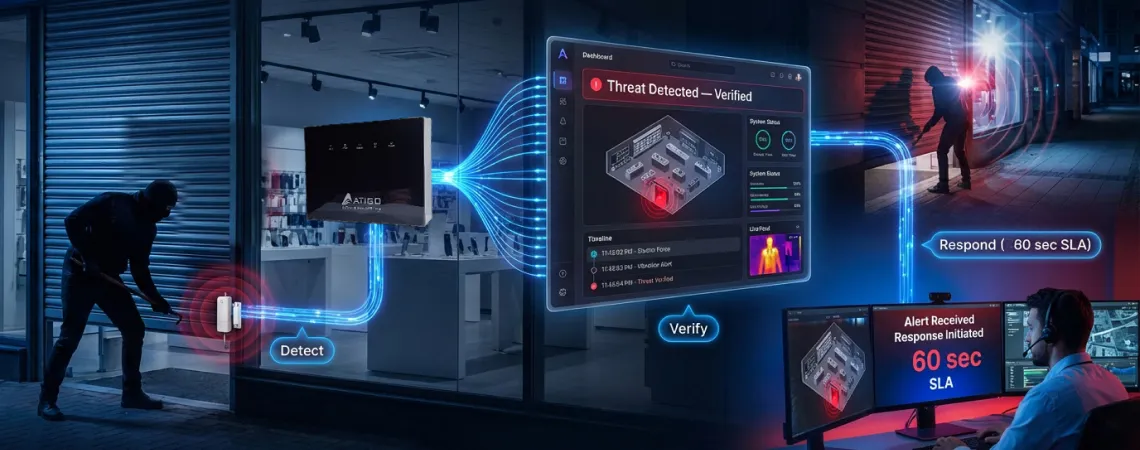
Atigo’s Professional Protection Platform is built to eliminate the delay between detection and action.
Here’s what happens when an alarm is triggered:
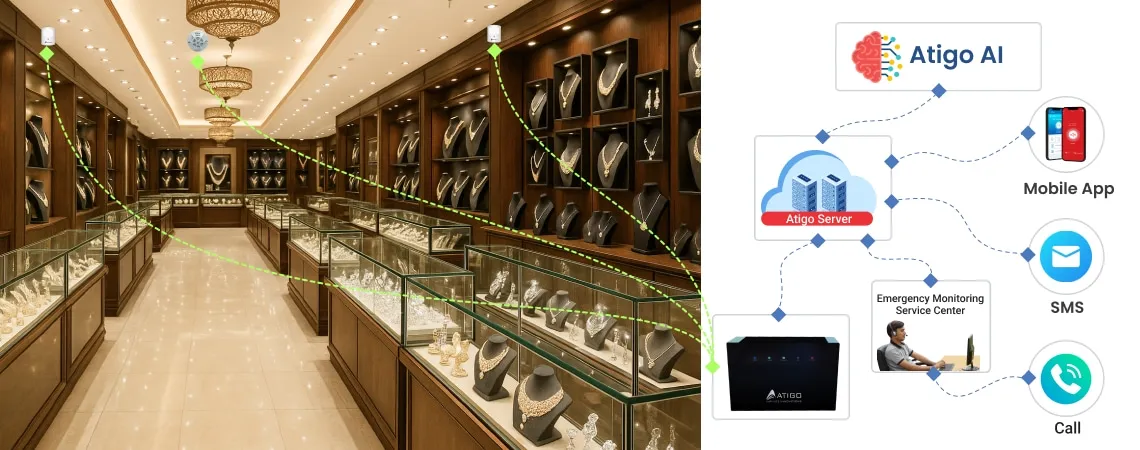
The moment a sensor is triggered, the alert is sent directly to a 24/7 Professional Monitoring Centre.
A trained Protection Officer reviews the alert within a 60-second SLA.
This ensures:
Correct response decisions are made
Once verified, alerts are immediately shared with you and your emergency contacts with clear details.
If the threat is confirmed, the system coordinates with Authorized Person For rapid Response.
Because the alert is verified, the response is:
Every action is logged and timestamped for transparency.
An app that only sends alerts does not actively protect your business.
It only informs you after something is already happening or already over.
Real protection requires:
They are useful for alerts, but they depend on user response, which may fail during emergencies.
It is a system connected to a 24/7 control room where trained professionals verify and respond to threats in real time.
Most break-ins are completed within 7–15 minutes, making fast response critical.
Yes, because it removes dependency on user response and ensures immediate action.
The real question is not whether your alarm works
It is whether anyone responds in time.
App-based security systems depend on you.
But real protection works even when you cannot respond.
Don’t wait for a real incident to expose the gaps in your security.
Upgrade from passive alerts to active protection.
📞 Call: +91 90999 01674